Application Analysis of the Multistage Vertical Turbine Pump in Steel Industry
In the steel industry, the multistage vertical turbine pump plays a crucial role in the transport, circulation, and pressurization of process water. These pumps are widely used for handling cooling water and flushing water in the production processes such as continuous casting of ingots, hot rolling of steel slabs, and hot sheet rolling. Due to their efficiency and reliability, multistage vertical turbine pumps are indispensable in maintaining seamless operations in steel production environments.
Structural Features of the Multistage Vertical Turbine Pump
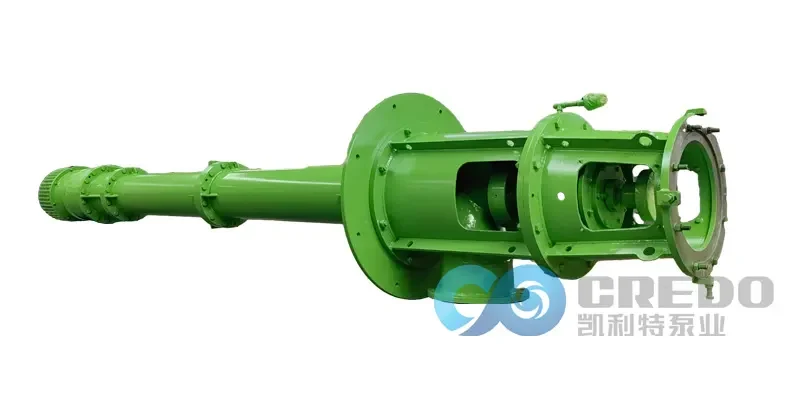
The multistage vertical turbine pump is designed with a vertical downward suction inlet and a horizontal discharge outlet. It requires no vacuum priming, making startup simple and reliable. The unit is installed on a single foundation, with a direct coupling between the motor and pump, reducing installation complexity and footprint. Viewed from the motor end, the rotor rotates counterclockwise. The main structural and performance characteristics include:
1. Optimized Hydraulic Design
The pump utilizes advanced hydraulic design software to achieve optimal performance. Special emphasis is placed on anti-abrasion properties of key components such as the impeller and guide vane body. This significantly enhances the service life of these components, while also improving the pump’s efficiency, safety, and energy savings.
2. Inlet Filter for Impurity Protection
A filter screen with appropriate opening size is installed at the pump’s inlet. This design prevents large particles from entering the pump, protecting internal components from damage, and at the same time minimizes inlet losses to maximize pump efficiency.
3. Axial Force Balancing and Sealing Rings
The impeller incorporates balance holes to reduce axial thrust. Replaceable sealing rings on both the front and rear cover plates of the impeller provide protection to the impeller and guide vane body, enhancing durability and ease of maintenance.
4. Rotor Assembly Components
The rotor assembly consists of the impeller, impeller shaft, intermediate shaft, upper shaft, coupling, adjusting nut, and other key components. These parts are precision-machined to ensure dynamic balance and reliable performance.
5. Modular Shaft and Column Structure
The intermediate shaft, water column, and protective pipe are modular in design. The shafts are connected via threaded or sleeve couplings, allowing the length of lift pipes to be customized according to the required submerged depth. The impeller and guide vane stages can be increased or decreased to meet different head requirements.
6. Shaft Rigidity and Length Optimization
The design ensures that each single shaft segment has adequate rigidity and appropriate length, which is essential for reducing vibration and maintaining operational stability.
7. Thrust Bearing Support
The residual axial force and rotor weight are absorbed by thrust bearings either in the motor support or within a motor equipped with thrust bearings. These bearings are lubricated using either grease (dry oil) or thin oil (liquid oil), depending on the application requirements.
8. Reliable Shaft Sealing and Easy Impeller Adjustment
The pump adopts stuffing box-type shaft seals with replaceable sleeves at sealing and guide bearing positions to protect the shaft from wear. The impeller’s axial position can be easily adjusted via the thrust bearing assembly or the adjustment nut in the coupling.
9. Clean Water Applications for Smaller Sizes
Multistage vertical turbine pumps with outlet diameters of φ100 mm and φ150 mm are designed for transporting clean water at ambient temperatures. These models do not require protective tubing or external lubricating water for the guide bearings.
Conclusion
The multistage vertical turbine pump is essential in the steel industry for handling high-temperature and high-volume water transfer operations. Its modular design, durability, high efficiency, and flexibility make it ideal for continuous and demanding environments. Regular maintenance and proper installation further ensure that these pumps deliver reliable performance throughout their operational life.