What’re the Common Causes of Efficiency Reduction in Split Casing Pumps?
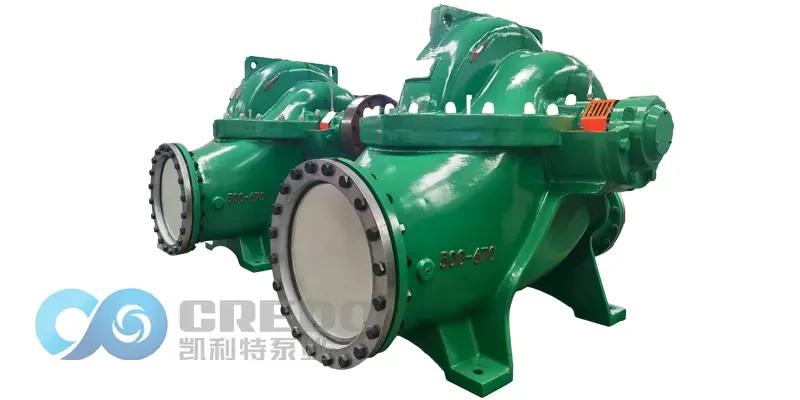
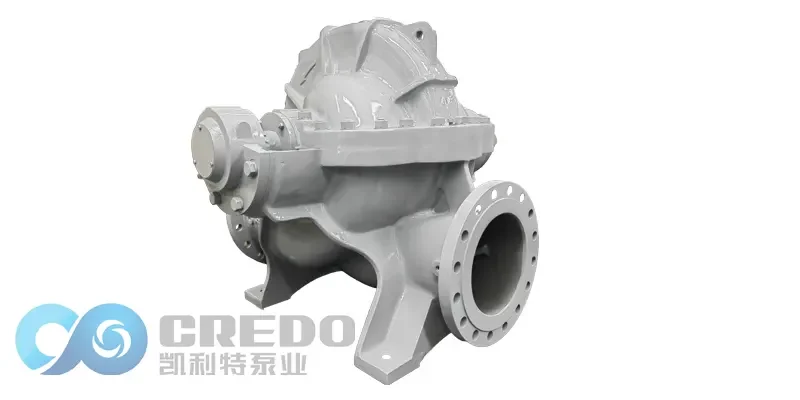
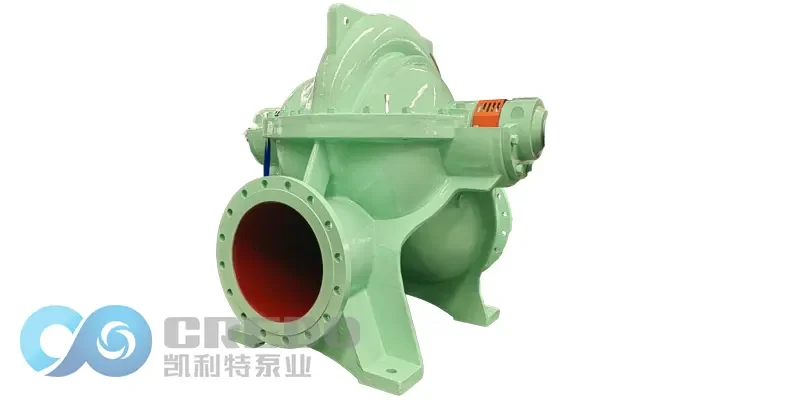
In applications such as industrial water supply, fire protection, HVAC circulation, and municipal engineering, split casing pumps are widely used for their high efficiency and stable performance. However, with prolonged operation or improper maintenance, the efficiency of the pump may noticeably decrease, leading to increased energy consumption and higher operating costs.
This article analyzes the common causes of efficiency reduction in split casing pumps and provides corresponding improvement measures.
I. Impeller Wear or Scaling
The impeller is the most critical energy conversion component in a split casing pump. When the pumped medium contains solid particles or impurities, the flow channels of the impeller are prone to erosion or wear, which alters the hydraulic profile and increases flow resistance.
If the medium contains carbonate or rust deposits, scaling may occur on the impeller surface, reducing the effective flow area and resulting in decreased flow rate and head.
Recommended Solutions:
Regularly inspect the impeller for wear; polish or replace it if necessary.
For applications involving solid particles, install a filtration system or use wear-resistant impeller materials.
II. Increased Clearance Between Pump Casing and Sealing Rings
The sealing ring and wear ring in a split casing pump are designed to limit leakage between high- and low-pressure areas inside the pump.
If the clearance between these components becomes excessive, fluid will leak from the high-pressure zone back into the low-pressure zone, causing internal recirculation (“internal leakage”) and significantly reducing volumetric efficiency.
Recommended Solutions:
Periodically measure the clearance of sealing or wear rings.
Repair or replace worn components as needed to maintain precise assembly tolerances.
III. Shaft Misalignment or Coupling Deviation
When the motor shaft and pump shaft are not properly aligned, additional vibration and friction are generated. This not only damages bearings and mechanical seals but also causes the impeller to operate off-center, reducing hydraulic efficiency.
Recommended Solutions:
Use laser alignment tools or dial indicators during installation and maintenance.
Ensure that the pump shaft and motor shaft remain on the same centerline.
IV. Bearing or Mechanical Seal Abnormalities
Bearing wear, insufficient lubrication, or mechanical seal leakage increases mechanical losses and causes pressure fluctuations inside the pump, leading to reduced efficiency.
Recommended Solutions:
Maintain proper lubrication and regularly replace grease or lubricating oil.
If leakage is detected, promptly replace the sealing components.
V. Operating Conditions Deviating from the Design Point
A split casing pump achieves maximum efficiency near its design flow rate, also known as the Best Efficiency Point (BEP). When system parameters such as valve opening, pipeline resistance, or liquid level change, the operating point may deviate from the BEP, leading to efficiency reduction or even cavitation.
Recommended Solutions:
Optimize pipeline design and operational control strategies.
Adjust valve openings appropriately to ensure operation within the high-efficiency range.
Conclusion
Efficiency reduction in split casing pumps is often the result of multiple factors acting together.
Companies should establish comprehensive maintenance procedures that include full inspection of impellers, bearings, seals, and operational parameters.
Through scientific maintenance and regular testing, it is possible not only to restore the pump’s high performance but also to extend equipment lifespan and reduce energy costs.