Key Design Requirements for Vertical Turbine Pumps According to API 610 and EN 12723
Vertical turbine pumps are essential in industries such as oil & gas, petrochemicals, and power generation. To ensure safety, reliability, and performance, two of the most influential international standards that govern their design and manufacturing are API 610 (American Petroleum Institute) and EN 12723 (European Norm). This article compares and analyzes the key design requirements of vertical pumps as specified in these two standards, highlighting their implications for engineers, manufacturers, and end-users.
Comparisons between API610 and EN12723
| No. | Topic | API 610 | EN 12723 | Key Considerations / Notes |
| 1 | Overview | Centrifugal pumps for petroleum, petrochemical, and natural gas industries. Focus on heavy-duty, process-critical pumps, including vertical pump types (Type VS). | European equivalent of API 610, aligned with ISO 13709. Covers similar topics but with differences in technical language, tolerances, and certain guidelines. | API 610 is more prescriptive; EN 12723 allows regional adaptation. |
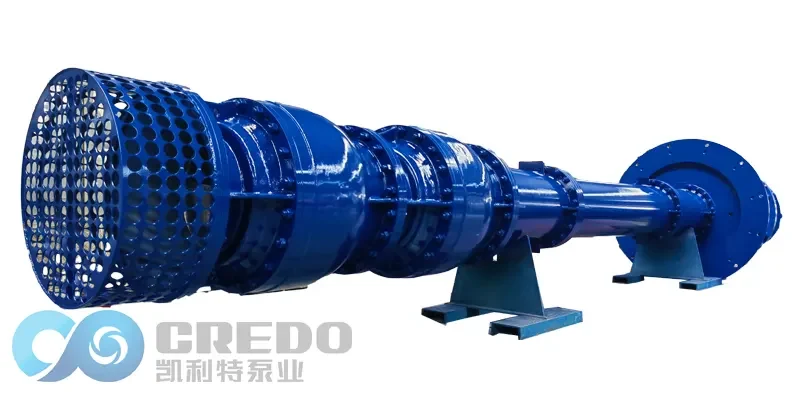
| 2 | Pump Type & Configuration | Covers vertical pump types like VS1, VS2, VS3, VS6. Clear categorization for shaft length, intermediate bearings, column design, and bowl assemblies. | Aligns with ISO designations; slightly more flexible construction specifications for European manufacturers. | API ensures standardized configurations globally; EN 12723 allows regional flexibility. |
| 3 | Shaft Design & Critical Speed | First critical speed ≥ 20% above max operating speed to avoid resonance and vibration. | Similar approach, may apply different calculation methods or tolerances. | API 610 uses more conservative shaft stiffness and deflection limits, leading to potentially heavier shafts. |
| 4 | Thrust Bearings & Axial Load | Specifies thrust bearing designs, especially for pumps with above-surface drivers. Bearings must handle full hydraulic load during startup, shutdown, and operation. | Requires robust axial thrust handling; may allow calculated sharing of axial loads between motor and pump bearings. | For variable load applications, API-compliant designs provide higher axial load safety margins. |
| 5 | Materials & Corrosion Resistance | Material class system (e.g., S-5, C-6, A-8) with strict documentation of heat treatment and chemical composition. | Refers to EN or ISO material grades; naming may differ but performance equivalent. | Cross-check material equivalence tables when sourcing internationally to ensure compliance. |
| 6 | Bearings & Lubrication | Detailed requirements for line shaft bearings: allowable materials (rubber, bronze, composite), lubrication methods (product, water, grease), and wear limits. | Aligns closely, less restrictive if performance is proven. | In hazardous environments, self-lubricated or sealed bearings are required to prevent contamination or fire risks. |
| 7 | Hydraulic Performance Testing | Hydrostatic and performance testing with stringent tolerances (efficiency, flow deviation) and detailed witness protocols. | Follows ISO 9906 test grades, allowing broader performance ranges in non-critical applications. | API-compliant pumps generally undergo more rigorous Factory Acceptance Testing (FAT). |
| 8 | Documentation & Quality Control | Extensive documentation: design data sheets, welding procedures, NDT results, inspection/test plans. | Requires documentation aligned with EU Quality Management Systems (PED, CE marking). | For global projects, API documentation is considered the gold standard for traceability and auditability. |
In conclusion, both API 610 and EN 12723 aim to ensure safe, reliable vertical pump performance in critical industries, but they differ in detail and regional emphasis. API 610 is more prescriptive and globally accepted in high-risk environments, while EN 12723 offers equivalent safety and performance for EU-based applications. For engineers and specifiers, understanding these standards ensures proper selection, compliance, and lifecycle optimization of vertical shaft pumps in demanding service conditions.