
Exploring Split Case Pumps: Design, Benefits, and Applications
The split case pump is a cornerstone in high-flow fluid management systems, known for its efficiency, stability, and ease of maintenance. This article delves into the design features, operational advantages, and applications of split case pumps, to provide clear and valuable insights for users.
Design and Functionality of Split Case Pump Impellers
The impeller of a split case pump is designed to function as two single-suction impellers of the same diameter operating simultaneously. This configuration doubles the flow rate without increasing the impeller’s outer diameter, making split case pumps ideal for applications requiring high flow. The symmetrical impeller structure balances axial forces, ensuring stable operation and reducing wear on components.
Convenient Maintenance with Split Case Pumps
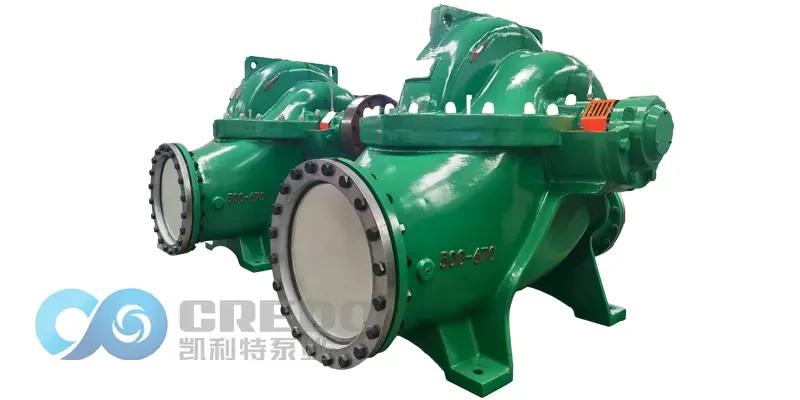
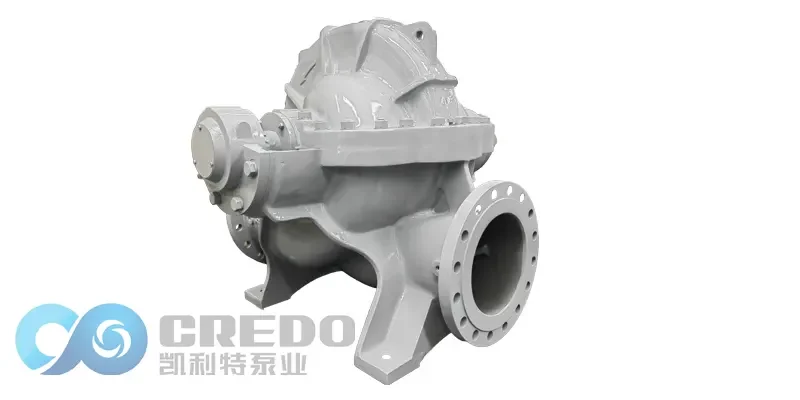
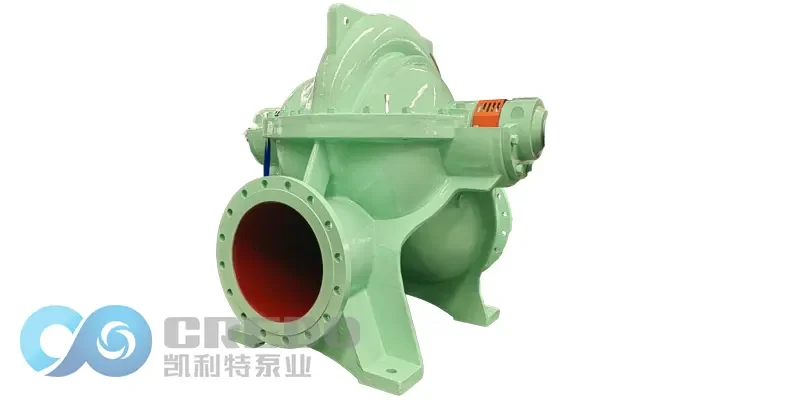
A defining feature of the split case pump is its horizontally split casing, which simplifies maintenance. By opening the pump cover, technicians can access internal components without disassembling the motor or connected pipelines. This design significantly reduces downtime and maintenance costs, making split case pumps a practical choice for industrial settings.
Inlet and Outlet Configuration
The split case pump features water inlet and outlet ports aligned in the same direction, perpendicular to the pump axis. This layout facilitates straightforward installation and integration with existing piping systems, enhancing the pump’s versatility in various setups.
Robust Shaft and Bearing Support
The impeller and pump shaft in a split case pump are supported by bearings at both ends, requiring a shaft with high bending and tensile strength. Insufficient shaft strength can lead to excessive deflection, causing vibrations, bearing burnout, or shaft failure during operation. A robust design ensures the split case pump operates reliably under demanding conditions.
Applications of Split Case Pumps
Due to their high flow capacity, stable operation, and ease of maintenance, split case pumps are widely used in large-scale applications, including:
Irrigation
Drainage systems
Municipal water supply
Industrial process
With growing demand for high-flow, high-head solutions, two-stage and three-stage split case pumps have emerged, further expanding their applicability in modern pumping stations.
Conclusion
The split case pump stands out for its efficient impeller design, ease of maintenance, and robust construction, making it a preferred choice for large-scale water management projects. Its ability to deliver high flow rates, coupled with stable operation and straightforward installation, ensures reliability in demanding applications like irrigation, drainage, and urban water supply. By understanding the unique features of split case pumps, operators can optimize performance and longevity in their systems.