13 Key Factors That Affect the Service Life of a Deep Well Vertical Turbine Pump
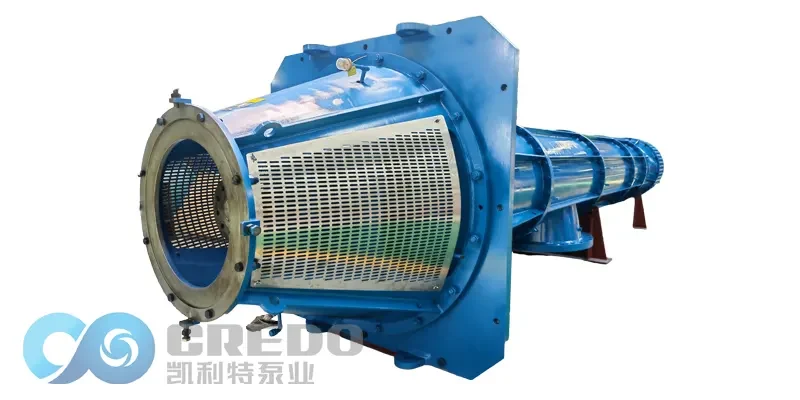
Like all rotating equipment, the deep well vertical turbine pump’s longevity heavily depends on how it is operated, maintained, and installed. In fact, most causes of premature failure are preventable and fall within the control of the end user.
This article explores 13 critical factors that directly impact the lifespan of a deep well vertical turbine pump, offering insights into how to minimize wear, reduce unplanned downtime, and optimize pump performance over the long term.
1. Radial Forces
One of the primary causes of pump failure is excessive radial force, which leads to bearing and mechanical seal damage. Operating the pump away from its Best Efficiency Point (BEP) increases shaft deflection and seal wear. The shaft may bend dynamically during operation, making it difficult for seal faces to stay aligned and for bearings to handle the load.
2. Lubricant Contamination
Over 85% of bearing failures are caused by contaminants like dust, debris, or water in the lubricant. Even a small amount—such as 250 ppm of water—can reduce bearing life by up to 75%. Clean, high-quality lubricants are essential for long-term bearing performance.
3. Suction Pressure
Suction pressure can influence axial load. In some pump designs, appropriate suction pressure reduces axial thrust, lightening the load on thrust bearings and thereby extending the life of your deep well vertical turbine pump.
4. Driver Alignment
Misalignment between the pump and motor drastically reduces bearing life. A small misalignment of 0.060 inches may cause failure within months, whereas precision alignment of 0.001 inches can result in years of uninterrupted operation.
5. Pipe Strain
Misaligned piping can cause stress at the pump flanges, distorting the bearing housing and misaligning internal components. This can lead to bearing misfit, vibration, and reduced operational life.
6. Fluid Properties
Corrosive or abrasive fluids accelerate internal wear. Parameters like pH, viscosity, specific gravity, and solids content must be carefully considered when selecting pump materials and establishing maintenance intervals.
7. Frequency of Start/Stop Cycles
Frequent cycling significantly increases wear. A pump that starts and stops every few seconds will degrade much faster than one that runs continuously. In such cases, system redesign or soft-start solutions may be necessary.
8. Net Positive Suction Head (NPSH) Margin
Maintaining a healthy margin between NPSH Available (NPSHA) and NPSH Required (NPSHR) helps prevent cavitation. Cavitation causes impeller damage and creates vibrations that shorten the life of bearings and seals.
9. Pump Speed
Higher operating speeds result in exponentially higher wear rates. A pump running at 3,550 RPM can wear 4 to 8 times faster than one operating at 1,750 RPM, especially in abrasive or corrosive environments.
10. Impeller Balance
Unbalanced impellers cause shaft wobble and radial deflection, similar to the effects of high radial forces. This leads to uneven loading on the bearings and mechanical seals, accelerating failure.
11. Piping Configuration and Inlet Conditions
Poor suction piping—especially horizontal elbows close to the pump—creates uneven flow patterns into the impeller, resulting in hydraulic imbalance, vibration, and premature wear. Vertical elbows are preferred when possible.
12. Operating Temperature and Thermal Shock
The rate of temperature change has a more significant impact on pump life than the operating temperature itself. Rapid heating or cooling causes thermal stress, which can lead to cracking and material fatigue.
13. Pump Casing Penetrations
Each tapped hole in the pump casing for drains or instrumentation introduces a potential stress concentration and corrosion point. Limiting unnecessary penetrations will help reduce long-term structural failure.
Conclusion
The operational life of a deep well vertical turbine pump is not just a matter of design or manufacturer quality—it is largely determined by the user’s attention to detail in maintenance, system design, alignment, and operating practices.
By proactively managing these 13 key factors—from bearing lubrication to inlet piping design—plant operators can significantly extend the service life of their pump, reduce costly downtime, and improve system efficiency.
Implementing best practices in daily operation and routine inspections will ensure your deep well vertical turbine pump performs reliably for many years to come.