How Multistage Vertical Turbine Pumps Balance Axial and Radial Loads for Long-Term Reliability
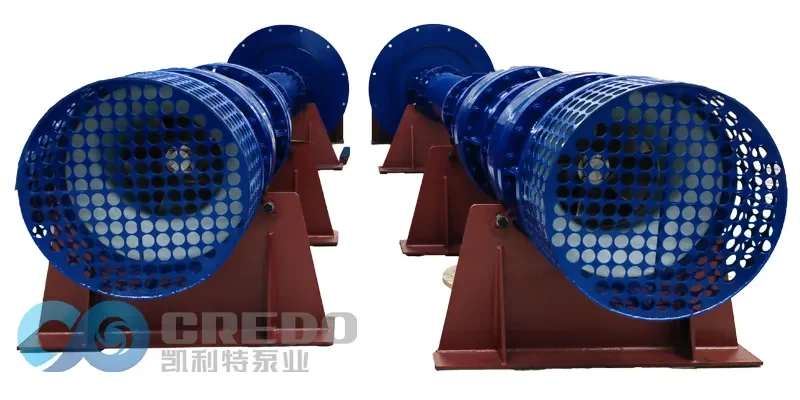
Multistage vertical turbine pumps are widely used in critical applications such as industrial cooling, water supply, chemical processing, and deep-well pumping. Ensuring the mechanical stability of these pumps over long operational periods requires careful management of axial and radial forces generated during operation. This article explores the mechanisms and design strategies used to balance axial and radial loads in multistage vertical turbine pumps, with real-world case data and engineering design considerations.
1. Axial Forces in Multistage Vertical Turbine Pumps
| Aspect | Cause / Description | Notes / Effects |
| Axial Forces Origin | Centrifugal Flow Effects | Pressure imbalance between front and back impeller covers generates axial thrust, typically toward suction side. |
| Stage-Wise Pressure Accumulation | Each pump stage adds to cumulative axial force due to increasing discharge pressure. |
2. Methods to Balance Axial Forces
| Method | Description | Effectiveness / Notes |
| Double-Suction Impeller | Fluid enters from both sides | Reduces net axial force by 70–90%, total thrust kept within 10–30% of original value. |
| Balance Holes | Holes in impeller back cover divert high-pressure liquid to suction inlet | Equalizes pressure, reduces axial force; optimized via CFD simulations to minimize hydraulic losses. |
| Reverse Blades (Final Stage) | Reverse blades create counter-force | Particularly effective in high-head, multistage vertical turbine pumps. |
3. Radial Loads and Control Methods
| Source of Radial Loads | Control Method | Notes |
| Rotor mass inertial imbalance | Impeller Symmetry Optimization | Odd-even blade matching (e.g., 5+7 blades) helps distribute forces uniformly. |
| Uneven pressure distribution | Dynamic Balancing | Ensures impeller mass center aligns with shaft axis, minimizing vibration. |
| Hydraulic turbulence / local flow disturbances | Mechanical Support Enhancements | Rigid intermediate bearing housings limit radial displacement; combined bearings manage axial and radial forces independently. |
| Hydraulic Compensation | Guide vanes and return chambers stabilize flow, reduce vortices, and suppress radial pressure spikes. |
4. Load Transmission in Multi-Stage Configurations
| Aspect | Method / Design | Notes |
| Stage-Wise Axial Force | Balance Disks | Create opposing pressure forces with small axial gaps to self-regulate axial load; common in high-pressure applications. |
| Shaft Stiffness | High-strength alloy steel (e.g., 42CrMo) | Validated via FEA; acceptable deflection ≤ 0.1 mm/m to prevent deformation and stress concentration. |
5. Key Design Guidelines for Multistage Vertical Turbine Pumps
| Parameter | Recommendation |
| Axial Force Limit | ≤ 30% of pump shaft tensile strength |
| Bearing Temperature | Thrust bearing < 70°C |
| Impeller Clearance | 0.2–0.5 mm |
| Dynamic Testing | Full-speed rotor balancing to G2.5 ISO standard before commissioning |
Conclusion
Balancing axial and radial loads in multistage vertical turbine pumps is a critical aspect of ensuring long-term operational stability. Through optimized impeller geometry, precision balancing components, and advanced simulation techniques, engineers can significantly reduce the risk of mechanical failure, improve energy efficiency, and extend the service life of the pump.
Looking forward, innovations such as AI-driven design optimization and additive manufacturing are poised to revolutionize how multistage vertical turbine pumps are engineered—enabling personalized, performance-optimized solutions for diverse industrial applications.
Note: Always ensure that designs comply with international standards like API 610 and ISO to guarantee safety and reliability in real-world operations.