How the Split Case Centrifugal Pump’s Horizontal Split Design Enhances Maintenance Convenience
In centrifugal pump design, ease of maintenance is one of the key indicators of equipment quality. The split case centrifugal pump, with its unique radial split structure, is widely used in industrial, water supply, and fire protection systems. Compared with vertical or end-suction centrifugal pumps, the split case design offers significant advantages in maintenance, inspection, and component replacement. This structure not only shortens downtime but also reduces maintenance costs and extends the service life of the equipment.
1. Design Features of the Horizontal Split Structure in Split Case Centrifugal Pumps
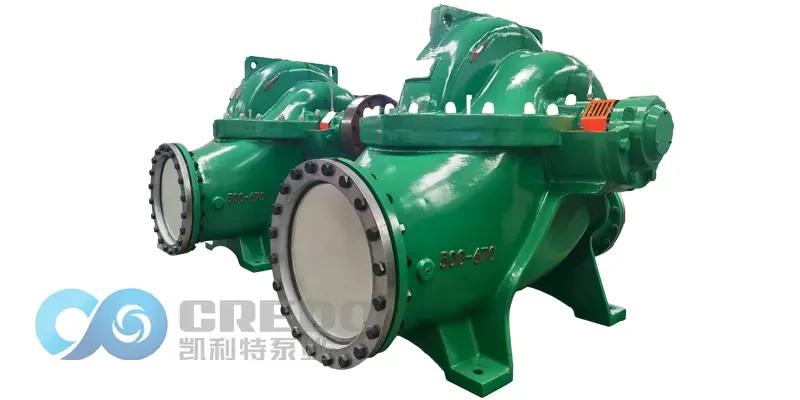
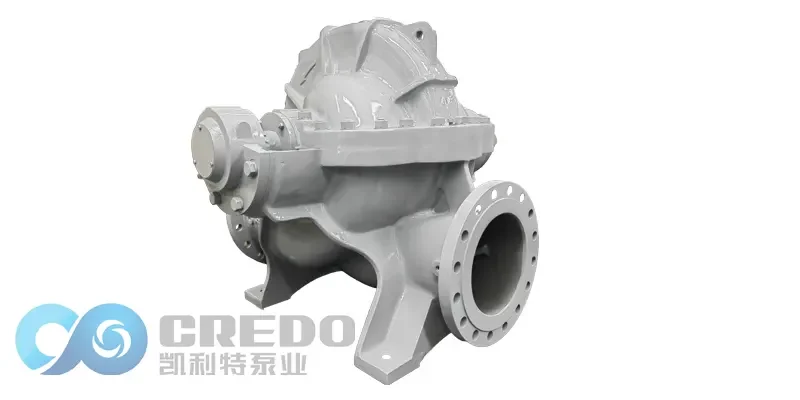
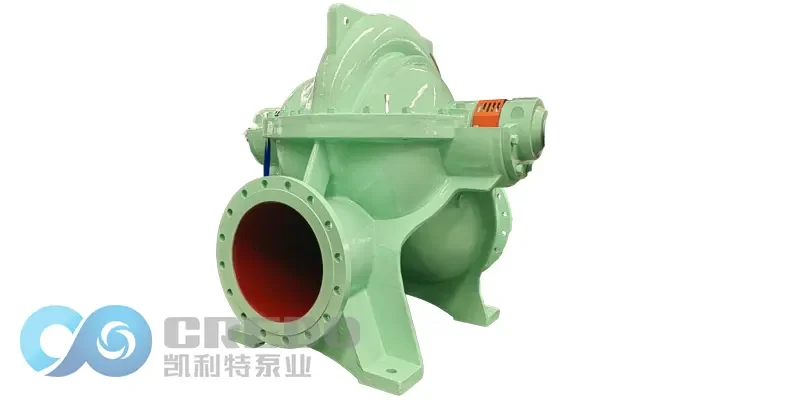
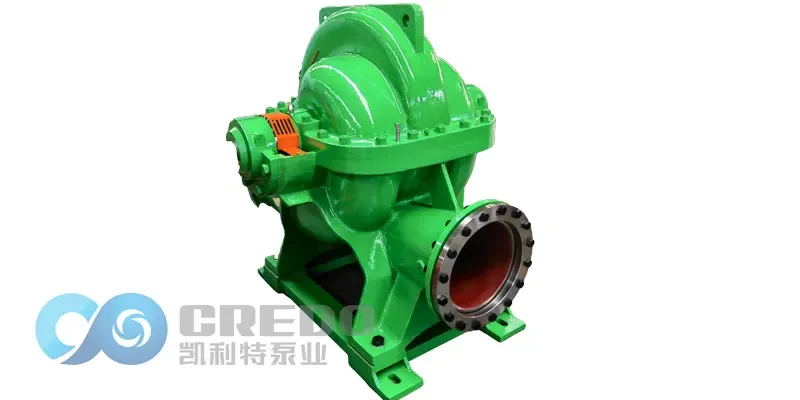
The casing of a split case centrifugal pump is horizontally divided along the pump shaft axis, with the upper and lower halves connected by bolts. The impeller is positioned on the horizontal centerline, while the suction and discharge nozzles are typically located on both sides of the casing for easy integration with the piping system.
The key advantage of this design lies in the fact that internal inspection and maintenance can be carried out without removing the piping or motor.
In contrast, end-suction centrifugal pumps often require disconnection of the suction piping or motor coupling to access the impeller or mechanical seal. For split case pumps, once the upper casing is opened, all main internal components—such as the impeller, shaft, bearings, and sealing devices—can be directly accessed.
2. Maintenance Advantages of the Split Case Design
No Need to Remove Piping or Drive Unit
The horizontal split design allows maintenance personnel to open the upper casing for inspection without moving the pump body or motor. This not only shortens the maintenance cycle but also eliminates the complex process of realigning the pump and motor shafts.
Quick Replacement of Wear Parts
When bearings, mechanical seals, or impellers are worn, operators can simply remove the upper casing to inspect, replace, or clean these parts directly—greatly improving maintenance efficiency.
Ease of Internal Cleaning and Inspection
Once the upper casing is opened, the internal pump chamber becomes fully visible, making it easy to check impeller balance, measure sealing clearances, and assess casing corrosion. For industrial pumps operating over long periods, this visual maintenance capability significantly improves overhaul quality.
Especially Beneficial for Large Pump Units
For large-capacity, high-head split case pumps, the pump body is often heavy and bulky. The horizontal split design eliminates the need for lifting the entire pump assembly—only the upper casing needs to be removed. This reduces manpower and lifting equipment requirements.
Reduced Downtime and Maintenance Costs
Due to its simple disassembly and short maintenance cycle, the split case centrifugal pump can resume operation in a much shorter time. This is particularly critical for continuous water supply, cooling, or fire protection systems, where it helps minimize operational risks and economic losses.
3. Conclusion
The horizontal split structure is the defining characteristic that distinguishes split case centrifugal pumps from other centrifugal pump types. This design enables faster, safer, and more cost-effective maintenance through its horizontally divided casing.
In systems requiring high reliability and rapid maintenance—such as municipal water supply, HVAC circulation, industrial cooling, and fire protection systems—the split case centrifugal pump is an ideal choice.
Through regular maintenance, proper assembly, and adequate lubrication, the service life of the pump can be further extended while ensuring efficient and stable operation.