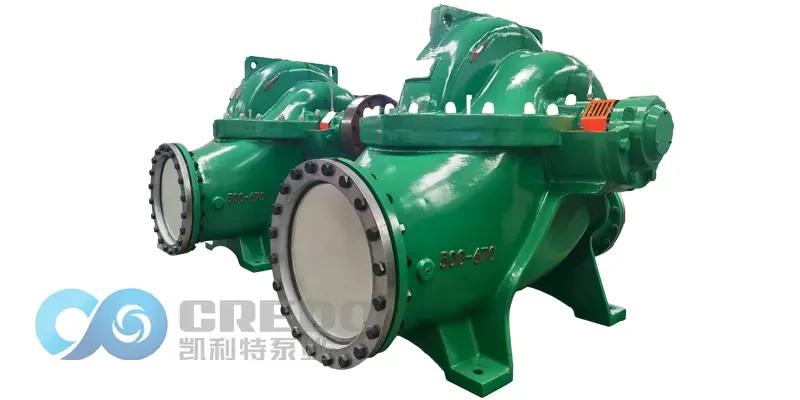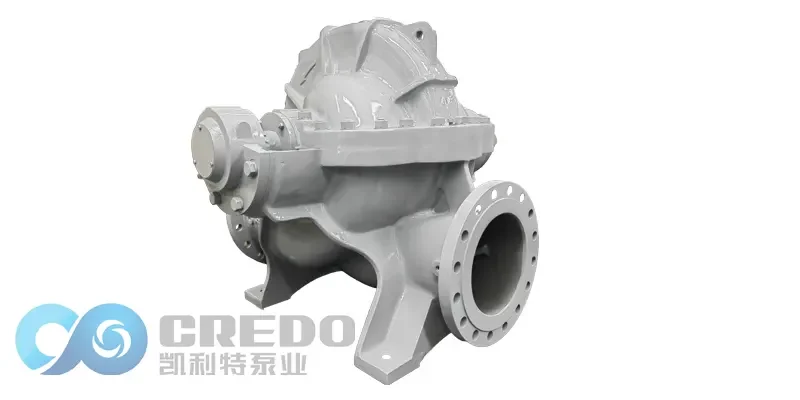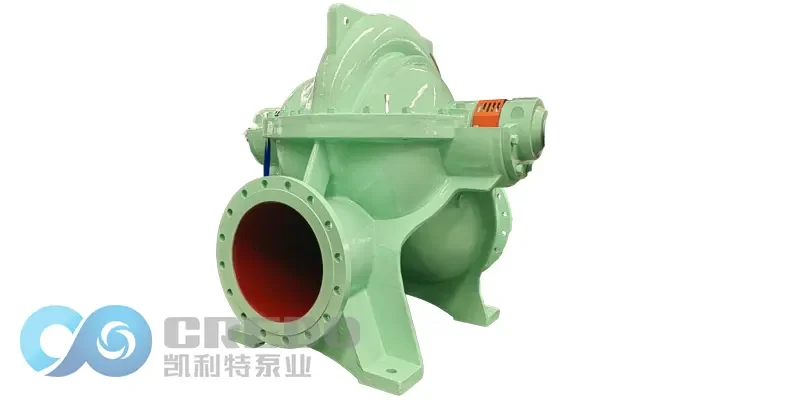
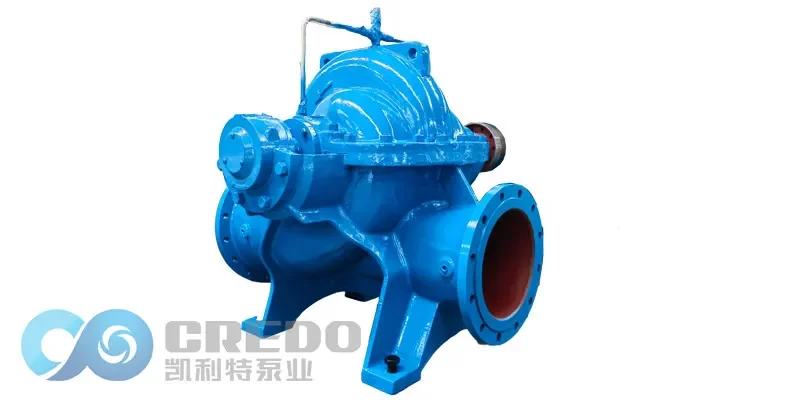
How to Flush the Mechanical Seal of a Double Suction Centrifugal Pump
In the operation of a double suction centrifugal pump, the reliability of the mechanical seal directly affects the sealing performance and service life of the pump. Since this type of pump usually handles large flow rates, high pressures, and complex media (which may contain suspended particles or corrosive components), improper cooling or flushing within the seal chamber can easily lead to dry friction, scaling, or wear of the sealing surfaces—ultimately causing leakage or failure. Therefore, a properly designed and implemented seal flushing system is a critical part of pump operation and maintenance.
I. Purpose of Mechanical Seal Flushing in a Double Suction Centrifugal Pump
The main purposes of mechanical seal flushing are as follows:
Cooling of sealing faces — Reduces frictional heat between the sealing rings, preventing thermal cracking or deformation.
Removal of impurities and gas — Flushes away particles and bubbles in the fluid, avoiding scratches on the seal faces.
Stabilization of seal chamber pressure — Minimizes the impact of pressure fluctuations on the seal balance.
Lubrication of seal faces — Maintains a stable liquid film, extending the seal’s service life.
II. Common Mechanical Seal Flushing Plans
Depending on the characteristics of the pumped medium and the system configuration, common flushing schemes for double suction centrifugal pumps include the following:
1. Internal Recirculation Flushing (Plan 11 / Internal Bypass)
This is the most commonly used plan. A portion of the high-pressure liquid from the pump discharge is diverted through a throttling or cooling line back into the seal chamber.
Features: Simple structure, no external system required.
Suitable Media: Clean, low-viscosity fluids.
Notes: The throttling orifice size should be properly controlled to avoid excessive flow that could cause seal chamber overheating.
2. External Flushing (Plan 32 / For High-Temperature or Dirty Media)
In this scheme, a clean, cooled liquid is injected into the seal chamber through an independent external line, isolating it from the process fluid.
Features: Excellent flushing performance, suitable for fluids containing solids or corrosive substances.
Typical Applications: River water, sewage, saline, or crystallizing fluids.
Disadvantages: More complex system; the external flush must have stable pressure and high cleanliness.
III. Flushing System Design and Considerations
Pressure and Flow Control: The flushing liquid pressure should be 0.1–0.2 MPa higher than the seal chamber pressure to prevent backflow of the process fluid.
Cooling Effect: For high-temperature media, a cooler should be installed in the flushing circuit to keep the liquid temperature below 80°C.
Filtration Accuracy: A filter with 50–100 μm precision should be installed at the flushing liquid inlet to prevent particles from entering the sealing interface.
Piping Layout: The flushing pipeline should be short, straight, and with minimal bends to ensure stable flow. Avoid air pockets in the line.
Monitoring and Maintenance: Regularly check flushing flow, temperature, and seal chamber pressure to ensure smooth operation of the flushing system.
IV. Conclusion
The mechanical seal flushing system plays a vital protective role in the operation of a double suction centrifugal pump. Selecting the proper flushing method—whether internal, external, or external circulation—based on the fluid properties, and maintaining appropriate pressure, temperature, flow, and cleanliness levels, can effectively prevent seal failure, extend pump service life, and reduce maintenance costs. A well-designed flushing system not only enhances seal reliability but also ensures safe and efficient pump operation.