How to Interpret Vertical Turbine Pump Performance Curves
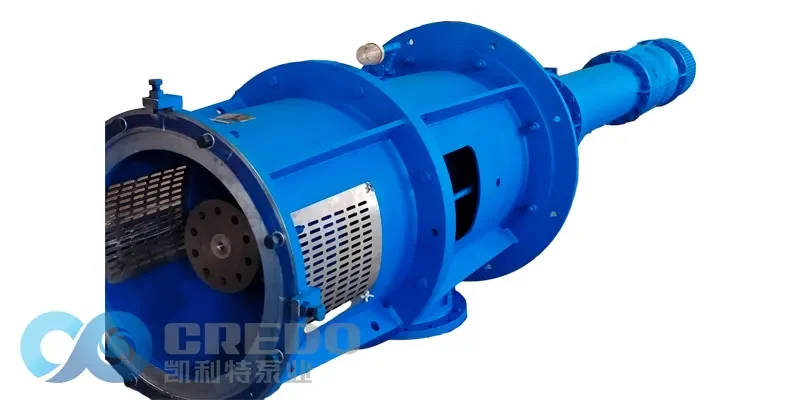
A vertical turbine pump (VTP) is a widely used pumping solution for industrial water supply and drainage, agricultural irrigation, mine dewatering, power plants, and fire protection systems. Its compact structure, ability to operate in deep wells or sumps, and capacity to deliver high head make it a preferred choice across various sectors. For engineers, operators, and maintenance teams, understanding and accurately interpreting vertical turbine pump performance curves is critical for pump selection, installation, operation, and troubleshooting.
Overview of Vertical Turbine Pump Performance Curves
The overall performance curve of a vertical turbine pump—often referred to simply as the ‘pump curve’—is derived from the hydraulic performance of the bowl assembly, combined with mechanical and hydraulic losses from the pump shafting, intermediate shaft bearings, discharge head, and discharge elbow. Correct interpretation of these curves is essential to ensure optimal pump operation and long service life.
1. Head vs. Capacity Curve (H-Q)
Definition: This fundamental curve shows the relationship between the total head (meters or feet) and the pump’s flow rate (m³/h or gpm) at a specific rotational speed.
Shape: Typically parabolic, starting with high head at low flow, then decreasing as flow increases.
Key Interpretation Points:
– Shut-Off Head:The maximum head at zero flow, located at the far left of the curve.
– Best Efficiency Point (BEP):The flow and head point where efficiency is highest, intended for stable long-term operation with minimal vibration and wear.
– Duty Point:The actual operating point required for the application, ideally close to the BEP.
– Operating Range:Recommended operation is within 70–120% of BEP flow. Prolonged operation below 40% or above 120% of BEP should be avoided to prevent cavitation, overload, or overheating.
2. Efficiency vs. Capacity Curve (η-Q)
Definition: Shows how efficiently the vertical turbine pump converts input shaft power into useful hydraulic output power at various flow rates.
Shape: Usually convex, peaking at the BEP.
Key Interpretation Points:
– Identify the peak efficiency value at the BEP.
– Evaluate efficiency across the flow range to determine energy-saving operation points.
– A flatter efficiency curve means better performance over a wider range of flows.
3. Power vs. Capacity Curve (P-Q)
Definition: Indicates the shaft input power (kW or hp) required at each flow rate. The motor or driver must exceed this power requirement, accounting for safety margins and motor efficiency.
Shape: For centrifugal pumps, including vertical turbine pumps, power generally increases with flow rate. Depending on the specific speed, shut-off power can be lower or higher than at operating flows.
Key Interpretation Points:
– Shut-Off Power: The input power at zero flow, mainly from mechanical losses.
– Maximum Power Point: Typically near the maximum flow rate.
– Driver Sizing: The motor should handle maximum expected power demand, with a safety margin to prevent overload.
Conclusion
Understanding vertical turbine pump performance curves is vital for selecting the right pump, ensuring efficient operation, and preventing premature wear or failures. By carefully evaluating the Head vs. Capacity, Efficiency vs. Capacity, and Power vs. Capacity curves, engineers and operators can optimize pump selection, reduce energy costs, and extend equipment life.