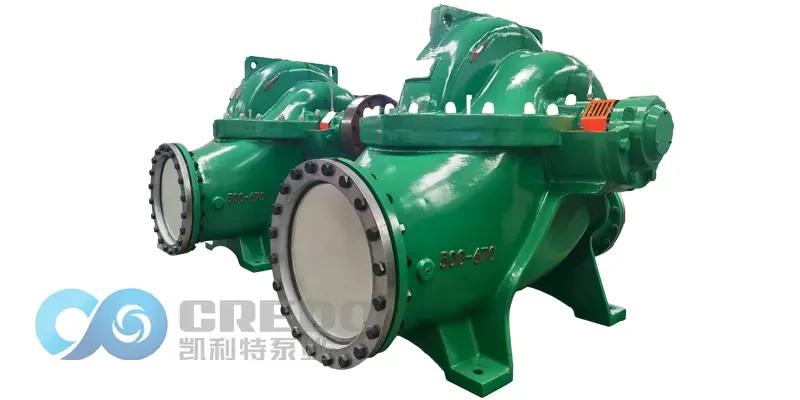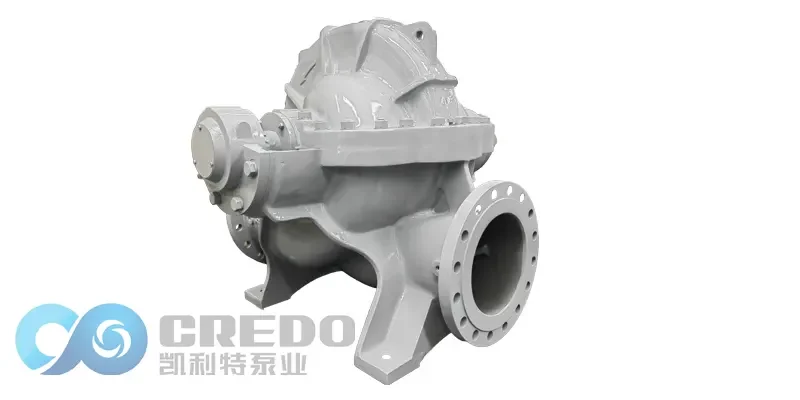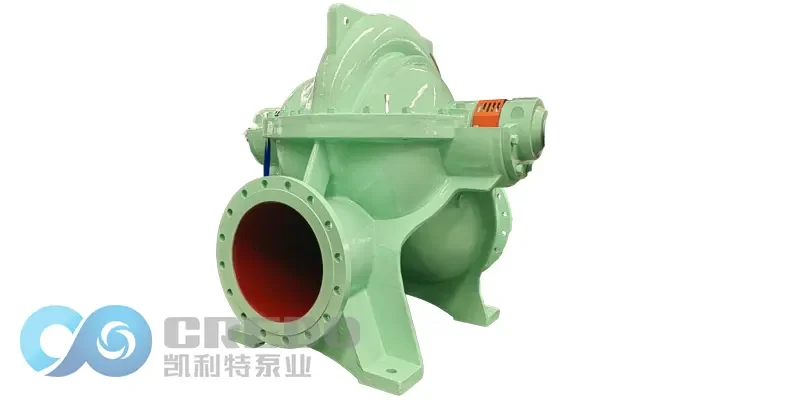
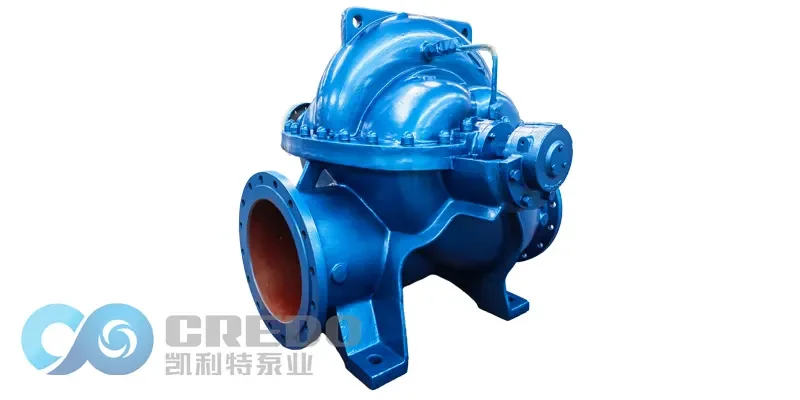
How to Optimize Horizontal Split Case Pump Operation for Maximum Efficiency (Part B)
Optimizing the operation of a horizontal split case pump requires careful attention to system design, piping layout, and operating conditions. In particular, improper suction piping and turbulent flow can cause hydraulic instability, cavitation, and excessive vibration. These issues can damage seals, bearings, and other internal pump components, reducing efficiency and reliability.
Pump Circulation Line
For horizontal split case pumps that operate under varying conditions, a circulation line may be necessary to return a portion of the pumped liquid to the suction side. This setup helps maintain stable operation near the Best Efficiency Point (BEP). While this consumes some energy, it is typically negligible in small systems. However, the recirculated fluid should be routed back to the suction source—not directly into the suction line or pump inlet—to avoid turbulence and potential operational issues. Proper baffling and flow control should be used to ensure smooth re-entry of the fluid.
Parallel Operation
In high-flow applications or where one large horizontal split case pump is impractical, multiple pumps may be operated in parallel. This configuration must be designed carefully. Identical or closely matched pump performance curves (within 2–3%) are essential. The combined pump curve should remain relatively flat to avoid unstable operation. According to API 610, the system must demonstrate at least a 10% head rise from rated flow to shutoff. Improper parallel configuration may result in severe inefficiencies, performance issues, or even mechanical damage.
Horizontal Split Case Pump Piping Design
Piping configuration plays a major role in minimizing vibration and preventing seal or bearing failure. Suction piping should deliver fluid to the impeller inlet under optimal conditions—free from turbulence and with proper pressure and temperature. Straight, short suction piping with a run of at least 6 to 11 times the diameter is recommended. Larger pipe diameters dramatically reduce frictional head loss. For instance, increasing pipe diameter by 10% can reduce head loss by nearly 40%.
Reducing Net Positive Suction Head Required (NPSHR)
Rather than increasing the Net Positive Suction Head Available (NPSHA), engineers may attempt to reduce the NPSHR of the pump. This is generally difficult, as NPSHR is influenced by pump design and speed. Using larger impeller suction eyes can reduce NPSHR but may introduce issues like recirculation. Low-speed pumps have lower NPSHR but may lack efficiency and reliability. In cases with space constraints or retrofitting limitations, booster pumps can be used. A booster pump—operating at low speed and requiring low NPSHR—is installed upstream to assist the main pump and prevent cavitation.
Identifying the Cause of Vibration
Flow rates below 50% of BEP can cause cavitation, air entrainment, and internal recirculation, all of which result in vibration and noise. Some horizontal split case pumps handle low flows better than others. Suction recirculation can appear at 35–75% of BEP flow depending on pump design. Outlet recirculation, often caused by improper impeller clearance, also leads to damage and vibration. Gas entrainment is common in systems with near-boiling liquids or complex suction piping. Inspecting the impeller for pitting and wear patterns can help identify the root cause of these problems.
ConclusionProper optimization of a horizontal split case pump includes well-designed suction piping, proper use of circulation lines, and careful implementation of parallel operation. Understanding the causes of vibration,