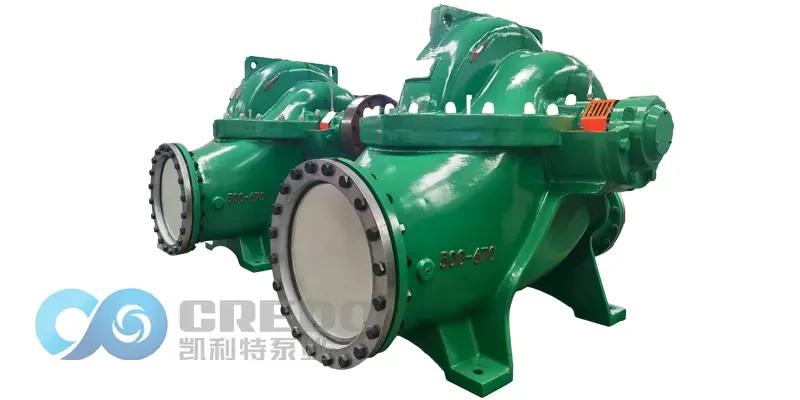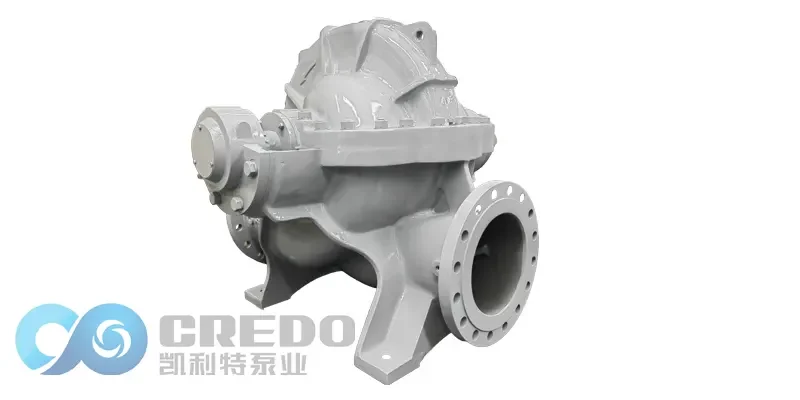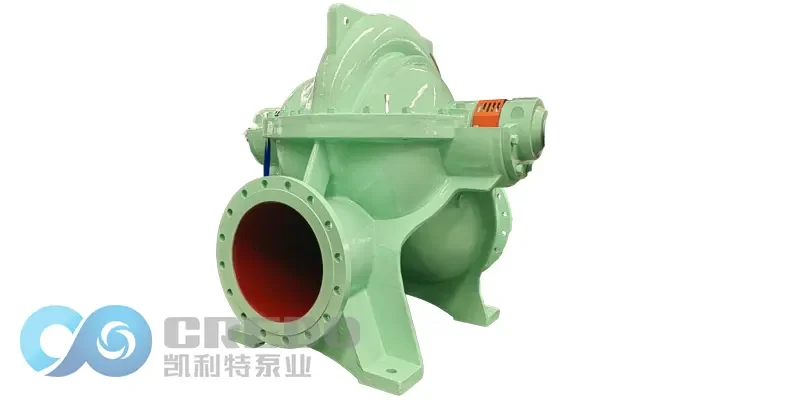

Performance Adjustment Calculation of a Split Case Double Suction Pump
Performance adjustment of a split case double suction pump is a systematic process of evaluating and modifying key operational parameters to meet specific application requirements. Proper adjustment ensures efficient operation under varying system conditions, reduces wear, and extends pump life. The process integrates hydraulic principles, system requirements, and mechanical integrity.
Key Steps in Performance Adjustment Calculation of a Split Case Pump Double Suction Pump
| No. | Adjustment Aspect | Key Points | Recommendations / Notes |
| 1 | Hydraulic Power and Efficiency Calculation | – Hydraulic power (N) is calculated using torque (M) and angular velocity (ω). – Hydraulic efficiency is evaluated using performance curves: Head vs. Flow (H-Q) and Efficiency vs. Flow (η-Q). | – Use H-Q and η-Q curves to identify the optimal operating range under different flow conditions. – Ensure that adjustments maximize efficiency and minimize energy consumption. |
| 2 | Flow Rate and Head Adjustment | – Flow rate is determined based on minimum, normal, and maximum process requirements. – Large flow / low head pumps: ~5% flow margin. – Small flow / high head pumps: ~10% flow margin. – Pump head should include a 5–10% safety margin above the system head requirement. | – Select flow and head margins to ensure stable operation. – Avoid under- or over-loading the pump. |
| 3 | Additional Adjustment Considerations | – Impeller Trimming: Reduce diameter to adjust flow and head. – Speed Adjustment: Modify pump speed to shift performance curves. – Internal Component Wear: Evaluate wear, clearances, and mechanical condition; these affect efficiency. | – Conduct thorough inspection before making adjustments. – Only perform changes based on analysis to maintain hydraulic and mechanical performance. |
| 4 | Actual Adjustment Procedures | – Disassemble the pump for inspection. – Identify worn or damaged parts. – Repair or replace components. – Reassemble with precise alignment. | – Check concentricity and axial positioning of the rotor and stationary components. – Proper installation ensures optimal performance and prevents premature wear. |
Important Considerations
Inspection and Analysis First: Before making any adjustments, evaluate pump performance, system requirements, and component condition.
Maintain Hydraulic Integrity: Ensure that flow paths, impeller geometry, and clearances are optimized for efficiency.
Mechanical Alignment: Rotor and stationary parts must be aligned concentrically and axially to prevent vibration, noise, and premature wear.
Manufacturer Guidelines: Always refer to the pump manufacturer’s adjustment specifications and tolerances.
Qualified Personnel: Only trained engineers or technicians should perform performance adjustments.
Conclusion
Performance adjustment calculation of a split case double suction pump is a detailed and methodical process that combines hydraulic calculations, system design analysis, and mechanical inspection. By applying structured adjustment techniques—evaluating hydraulic power, optimizing flow and head, trimming impellers, adjusting speed, and maintaining component integrity—engineers can ensure reliable, efficient, and long-lasting pump operation.
Proper adjustment not only enhances energy efficiency and operational stability but also minimizes maintenance costs and extends pump lifespan. For optimal results, always consult manufacturer guidelines and engage qualified technicians or engineers during adjustment procedures.