Pre-Start Inspection Checklist for Submersible Vertical Turbine Pumps
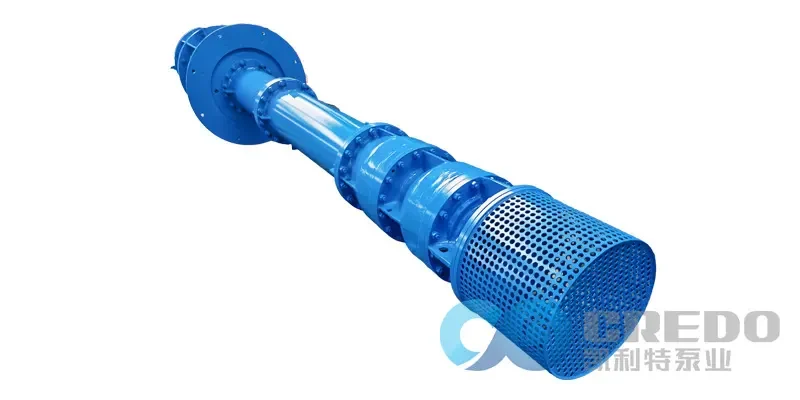
Submersible vertical turbine pumps are widely used in applications such as deep wells, cooling water, circulating water, fire protection, and industrial water supply. They are commonly employed across municipal, chemical, power generation, and water treatment industries. To ensure smooth operation after startup and to prevent mechanical failures or excessive energy consumption, thorough inspection and preparation before starting the pump are essential. This article systematically introduces the key inspection points and precautions before starting a submersible vertical turbine pump, helping maintenance personnel efficiently complete pre-start preparations.
I. Key Inspection Points Before Starting a Submersible Vertical Turbine Pump
1. Appearance and Installation Check
Foundation and Installation Condition:
Check that the pump body, base, and support structure are firm, stable, and free from looseness, deformation, or cracks. Ensure that the motor and pump shafts are properly aligned — coupling misalignment should be within the specified installation tolerance.
Pump Body and Piping:
Ensure that suction and discharge pipelines are tightly connected and free from leakage, cracks, or deformation. The suction inlet must be clear of debris or obstructions, and the foot valve should operate smoothly and reliably.
Protective Devices:
Check whether the motor guard, shaft seal protection, and safety barriers are complete and securely installed.
2. Lubrication and Cooling System Check
Bearing Lubrication:
Verify that the bearing housing oil level (or grease) is normal and that the lubricant is clean. Replace immediately if the oil appears dark or emulsified.
Line Shaft Bearing Lubrication:
Submersible vertical turbine pumps usually use clean water or external lubrication systems. Before startup, ensure the lubricating water flow is smooth and that pressure and flow rate meet design requirements.
Motor Cooling:
For high-power motors, check that the cooling fan or cooling water system functions properly to prevent overheating.
3. Electrical and Instrumentation Check
Power Supply:
Confirm that the voltage, phase sequence, and current comply with rated parameters. Ensure all terminals are tight and free from oxidation.
Control System:
Check the control cabinet, buttons, indicator lights, and protective devices (such as overload, phase-loss, or over-temperature protection) for proper function.
Instrumentation:
Pressure gauges, temperature indicators, and vibration monitors should be accurate and responsive. For pumps with an automatic control system, perform an interlock test before startup.
4. Shafting and Rotational Check
Manual Rotation:
Manually turn the coupling to ensure smooth rotation without jamming or abnormal friction noise.
Axial Play and Clearance:
Check that the axial movement of the shaft system is within the specified limits to prevent rotor contact during startup.
Impeller Position:
Confirm that the impeller is installed at the correct depth and position to prevent cavitation or air entrainment.
5. Suction Well and Water Level Check
Water Level Height:
Ensure that the suction well water level is above the minimum allowable starting level to prevent air entry and cavitation.
Cleanliness:
The well should be free from debris, floating materials, or sediment buildup. Clean if necessary.
Valve Condition:
The discharge valve should be properly opened or half-closed according to the startup procedure.
6. Trial Run and System Integration Test
No-Load or Short-Term Wet Run:
Conduct a no-load or short-term wet test before full operation. Observe pump vibration, noise, rotation direction, and current variation.
Abnormal Conditions:
If excessive vibration, leakage at shaft seals, or high current is detected, stop the pump immediately for inspection.
Smooth Operation Confirmation:
The pump can be put into full-load operation only after confirming stable and normal performance.
II. Precautions and Recommendations
Never Run Dry:
The submersible vertical turbine pump must be fully primed with liquid before startup to prevent damage to the line shaft bearings.
Follow Operational Procedures:
Always follow the manufacturer’s operation manual strictly, especially for large, multi-stage submersible vertical turbine pumps.
Maintain Inspection Records:
Record all pre-start inspection results in detail for future maintenance and performance analysis.
Conclusion
Pre-start inspection of a submersible vertical turbine pump is a critical step to ensure equipment safety, extend service life, and enhance operating efficiency. Every step — from foundation inspection to electrical checks, from lubrication verification to water level confirmation — must be carried out meticulously. Through standardized inspection and commissioning, early-stage mechanical failures and hydraulic abnormalities can be effectively avoided, laying a solid foundation for the pump’s long-term stable operation.