Split Case Pump Key Features: Rotation, Sealing, and Lubrication
The split case pump is a vital component in various industrial and commercial applications, known for its efficiency and reliability. Understanding its key features—rotation direction, sealing methods, and bearing lubrication—is essential for selecting and maintaining the right pump for your needs.
1. Rotation Direction of Split Case Pumps
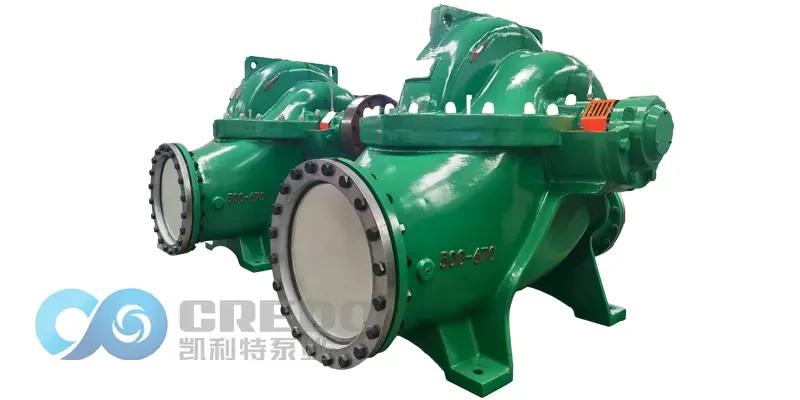
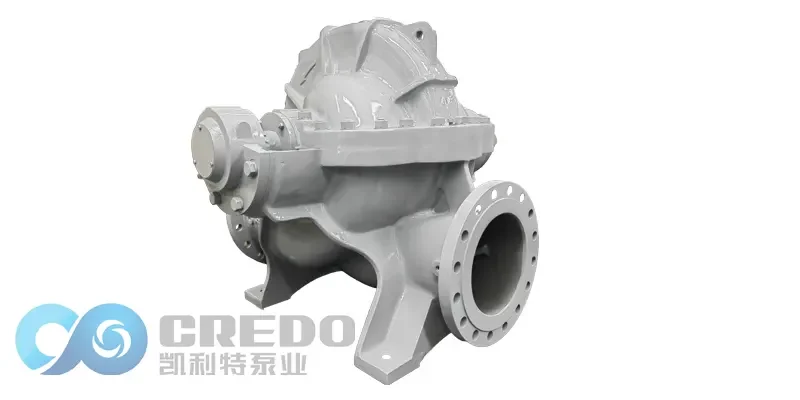
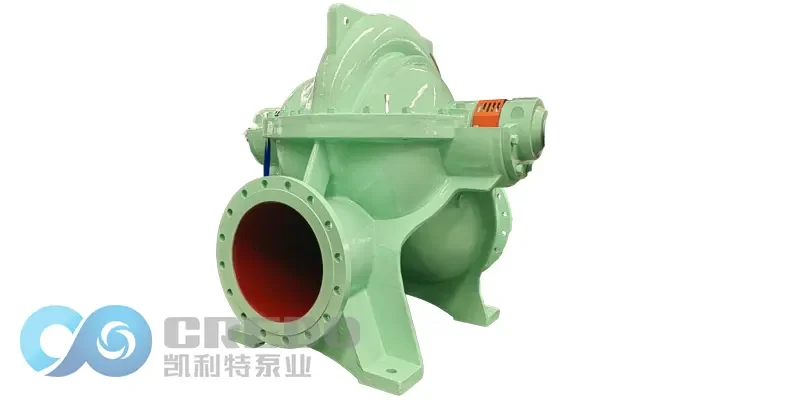
The rotation direction of a split case pump, when viewed from the motor end, significantly impacts its design and installation within a pump room. The direction determines the positioning of the pump’s inlet and outlet:
Counterclockwise Rotation: When the pump rotates counterclockwise (viewed from the motor side), the inlet is positioned on the left, and the outlet is on the right.
Clockwise Rotation: When the pump rotates clockwise, the inlet is on the right, and the outlet is on the left.
This configuration is critical for proper pump room layout and efficient system integration, ensuring the pump operates seamlessly within your setup.

2. Sealing Methods for Split Case Pumps
The sealing mechanism of a split case pump is crucial for preventing leaks and ensuring operational efficiency. Common sealing options include:
Packing Seal: Traditional soft packing seals provide a cost-effective solution for sealing the pump shaft, suitable for various applications.
Mechanical Seal: Mechanical seals offer enhanced durability and leak prevention, ideal for high-pressure or critical applications.
Choosing the appropriate sealing method for your pump depends on the specific operational requirements, such as pressure, fluid type, and maintenance preferences.
3. Bearing Lubrication in Split Case Pumps
Bearing lubrication is a key factor in maintaining the performance and longevity of a split case pump. The two primary lubrication methods are:
Grease Lubrication: Grease-lubricated bearings are simpler to maintain and suitable for many standard applications, providing reliable performance with minimal upkeep.
Thin Oil Lubrication: Thin oil lubrication is often used in high-performance pumps, offering superior cooling and reduced friction for demanding operations.
Most pumps are clearly marked with their lubrication method, making it easier for operators to ensure proper maintenance and compatibility with the pump’s design.
Conclusion
Understanding the rotation direction, sealing methods, and bearing lubrication of split case pumps is essential for optimizing their performance and ensuring long-term reliability. By selecting the appropriate configuration based on your system’s needs—whether it’s the pump’s rotation for layout planning, sealing for leak prevention, or lubrication for maintenance—you can enhance the efficiency and durability of your pump. Proper attention to these features ensures seamless operation in diverse industrial applications.