What Is the Test Process for a Split Case Double Suction Pump? A Step-by-Step Guide
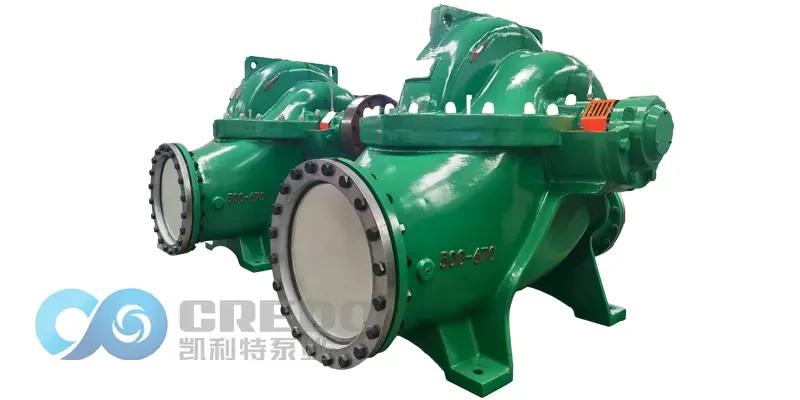
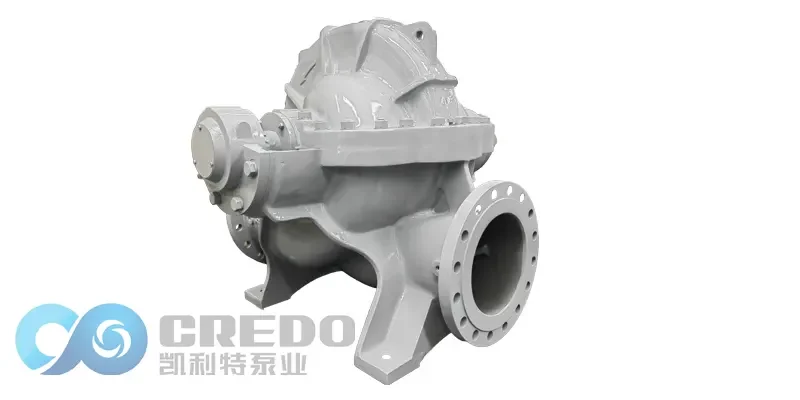
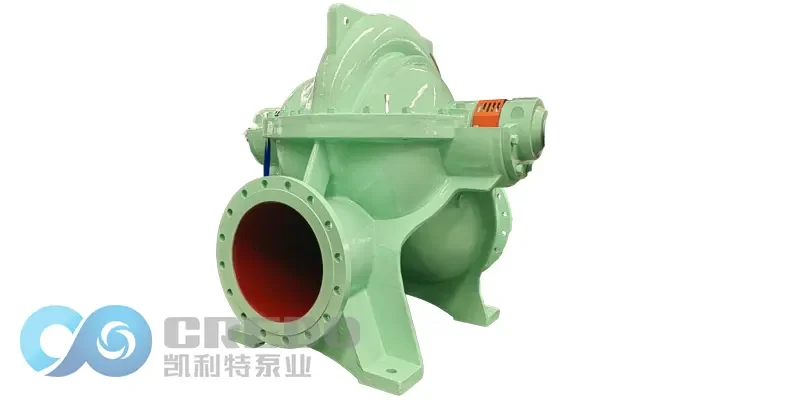
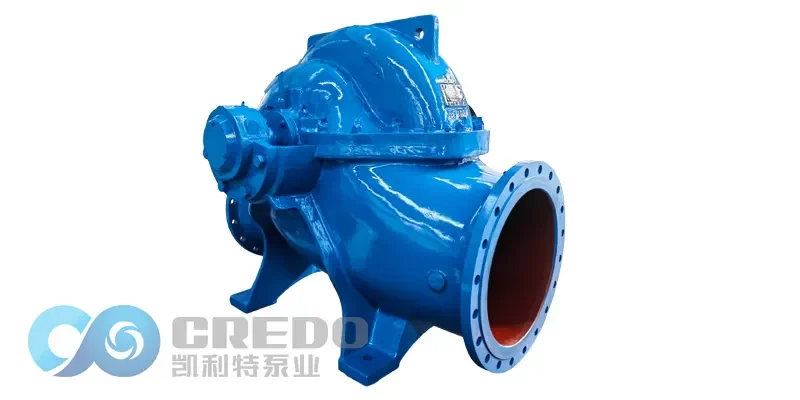
The split case double suction pump is widely used in large-scale fluid transport applications due to its high efficiency, stable performance, and balanced axial thrust. To ensure that the pump meets performance standards and design requirements before commissioning, a complete and standardized testing process must be followed.
This guide outlines the essential steps involved in testing a split case double suction pump, including preparation, pressure testing, and performance evaluation. Each stage is critical for verifying product quality and ensuring reliable operation in the field.
1. Preparation for Testing a Split Case Double Suction Pump
| Step | Inspection / Action | Key Points / Notes |
| 1 | Motor Direction Check | Start the motor and verify correct rotation direction. |
| 2 | Coupling Runout Measurement | Use a micrometer to measure pump and motor coupling runout. Adjust using shims under the motor base to ensure runout < 0.05 mm. |
| 3 | Rotor Clearance Check | Rotate the pump shaft manually to confirm no contact between rotor and pump casing. |
| 4 | Pipe and Valve Installation | Connect inlet and outlet pipelines, install valves, and attach instrument terminals. |
| 5 | Priming the Pump | Use a vacuum pump to fill the pump with water and remove trapped air via vacuum water supply line. |
2. Pressure Testing of the Split Case Double Suction Pump
| Stage | Test Type | Test Pressure | Test Medium | Key Notes |
| 2-1 | Initial Hydrostatic Test (After Rough Machining) | 0.5 × design pressure | Clean water at room temperature | Verifies basic structural integrity. |
| 2-2 | Final Hydrostatic Test (After Fine Machining) | 1.0 × design pressure | Clean water at room temperature | Ensures full sealing and strength of pump casing. |
| 2-3 | Pneumatic Test (After Assembly, Mechanical Seals Only) | 0.3–0.8 MPa | Air | Checks mechanical seals under controlled air pressure. |
Important Note: Always use calibrated equipment (pressure gauges, test machines, test plates) and proper sealing methods to prevent false results. After successful pressure testing, proceed to performance evaluation.
3. Performance Testing of the Split Case Double Suction Pump
The performance test evaluates the operational efficiency of the pump under specified working conditions. It includes the measurement of flow rate, speed, and shaft power.
| Test | Measurement Method | Key Points / Notes |
| 3-1 | Flow Measurement | Use an electromagnetic flowmeter or intelligent flow speed meter. Displays real-time flow data for comparison with design parameters. |
| 3-2 | Speed Measurement | Speed sensor transmits data to intelligent meter, showing pump rotational speed directly. |
| 3-3 | Shaft Power Calculation | – Input Power (P1): Measured with electrical parameter analyzer. – Motor Efficiency (η1): Provided by motor manufacturer. – Shaft Power (P2): Calculated as P2 = P1 × η1. |
Conclusion: Why Pump Testing Is Crucial Before Commissioning
The structured test process for a split case double suction pump—from mechanical alignment to hydraulic performance validation—is essential to guarantee safety, durability, and operational efficiency. By conducting thorough testing before the pump is deployed, manufacturers and users can ensure that the equipment meets all design and application-specific requirements.
Investing in a standardized test process not only reduces future maintenance costs but also enhances long-term system reliability. Whether for municipal water supply, HVAC systems, or industrial fluid transport, testing is the final checkpoint to validate pump quality and performance.