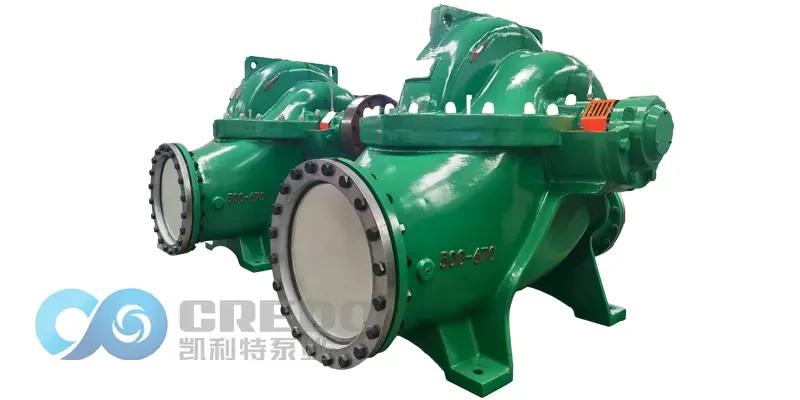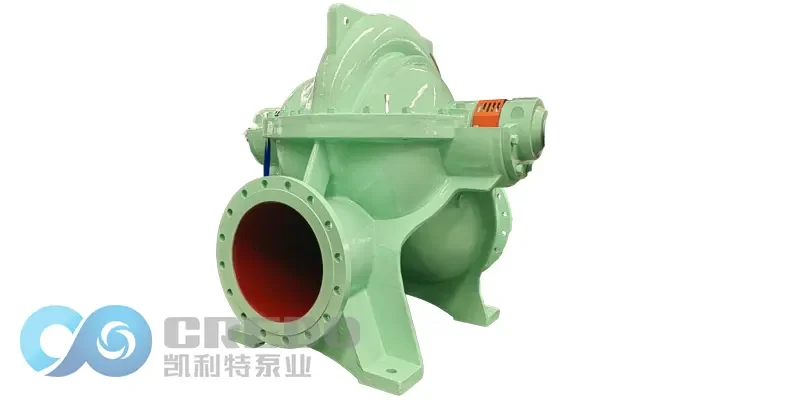
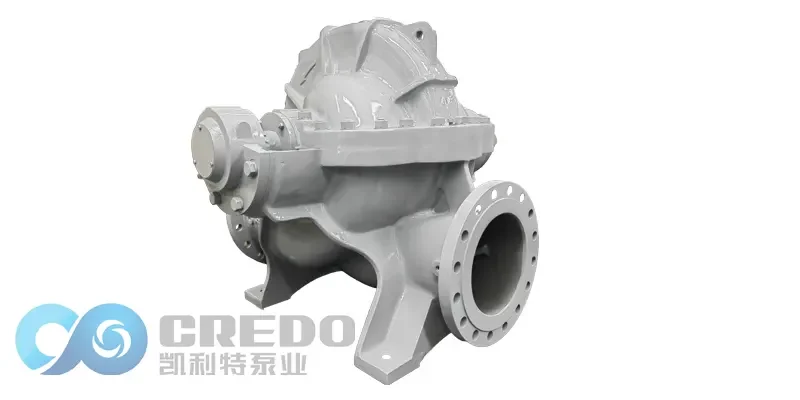
What Are the Key Startup Procedures for a Split Casing Pump?
Split casing pump, to ensure reliable performance and prevent equipment damage, following proper startup procedures is essential. A well-executed startup not only protects the pump and its components but also extends service life and maintains overall system efficiency. The following sections outline the key startup procedures for a split casing pump, covering pre-startup checks, priming, system inspection, and initial running conditions.
1. Pre-Startup Inspection
Before starting a split casing pump, a comprehensive inspection of the entire system should be conducted. This includes verifying that the pump, motor, piping, and auxiliary systems are installed correctly and free from mechanical issues. Key items include:
Alignment Check: Ensure the pump and motor are properly aligned. Misalignment can lead to excessive vibration, noise, bearing wear, and premature shaft failure. Alignment should be verified after installation, after coupling adjustment, and after any maintenance activity.
Coupling and Fasteners: Inspect the coupling for correct installation and confirm that all bolts, nuts, and fasteners on the pump casing, bearing housing, and baseplate are tightened according to manufacturer specifications.
Lubrication: Check the lubrication of bearings. Oil levels should be within the sight glass range, and grease-lubricated bearings must contain the correct type and quantity of grease.
Rotation Direction: Manually rotate the shaft to ensure it turns smoothly and without abnormal resistance. Confirm the motor rotation matches the required direction indicated on the pump.
2. Piping and Valve Verification
Proper piping configuration is necessary for stable pump startup. The suction and discharge piping should be supported independently—not relying on the pump casing—to prevent misalignment and undue stress.
Suction Valve: The suction valve must be fully opened before startup. A restricted suction line will cause cavitation, noise, and performance loss.
Discharge Valve: The discharge valve should typically be partially closed at startup to reduce the starting load on the pump and motor. Once the pump reaches normal speed, the valve can be gradually opened to the required operating point.
Check Valve: Verify the check valve on the discharge line operates freely to prevent reverse flow when the pump stops.
Air Venting: Ensure all air has been vented from the suction line. Split casing pumps are not self-priming; therefore, the system must be completely filled with liquid before startup.
3. Priming and System Filling
Priming is one of the most critical steps because entrapped air in the suction line can lead to dry running, impeller damage, mechanical seal failure, and severe vibration.
Fill the Pump Casing: Ensure the pump casing is entirely filled with liquid. If the suction source is below pump level, use a vacuum pump or priming device.
Eliminate Air Pockets: Open vent valves on the casing to release trapped air. Air pockets reduce hydraulic efficiency and cause unstable pressure.
Check Suction Conditions: Confirm that the Net Positive Suction Head Available (NPSHa) exceeds the pump’s NPSHr to avoid cavitation during startup.
4. Electrical and Control System Checks
Before energizing the motor, verify all electrical settings:
Motor Protection Settings: Ensure overload protection, short-circuit protection, and under-voltage devices are properly calibrated.
Instrumentation: Confirm that pressure gauges, flow meters, and vibration sensors are functional.
Soft Starter or VFD: If used, verify that ramp-up parameters are correctly set for smooth acceleration.
5. Pump Startup Procedure
Once all preparatory tasks are complete, the pump can be started safely:
Confirm the pump casing and suction line are fully primed.
Ensure the suction valve is fully open.
Partially close the discharge valve.
Energize the motor and allow the pump to reach full operating speed.
Gradually open the discharge valve to achieve the required flow and pressure.
Monitor pressure, vibration, noise, and flow to ensure stable operation.
6. Initial Running Checks
During the first minutes of operation, several conditions must be monitored closely:
Vibration and Noise: Excessive vibration may indicate misalignment, cavitation, or air ingestion.
Bearing Temperature: Bearings should warm gradually. Sudden overheating indicates lubrication or alignment issues.
Seal Leakage: Mechanical seals should show no visible leakage; gland packing should have a controlled drip rate.
Pressure and Flow: Compare actual readings with design conditions to confirm the pump is operating near the Best Efficiency Point (BEP).
Conclusion
Proper startup procedures are vital for the safe and efficient operation of a split casing pump. By performing thorough pre-startup checks, ensuring correct priming, inspecting piping and valves, verifying the electrical system, and monitoring early running conditions, operators can prevent failures, stabilize performance, and extend equipment life. A disciplined startup routine ensures that the split casing pump delivers reliable service in the most demanding industrial applications.