What Are the Most Common Wear Parts in a Vertical Turbine Pump?
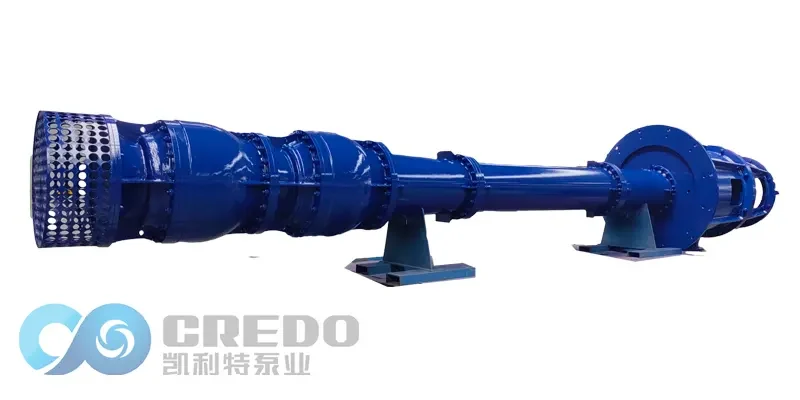
The submersible vertical turbine pump is widely used in municipal water supply, power plant cooling, industrial circulation, and agricultural irrigation systems due to its high head, high efficiency, and adaptability to deep-well applications. However, because of its complex structure and varied operating environments, some components experience significant wear, corrosion, and vibration loads during long-term operation. Understanding the most common wear parts and the challenges involved in their maintenance and replacement is essential to ensure long-term reliability, minimize downtime, and maintain stable system performance.
1. Main Wear Components in Submersible Vertical Turbine Pumps
Guide Bearings
Guide bearings are among the most typical wear components in a VTP. Due to the long-shaft design, multiple bearings are distributed along the shaft sleeves and column pipes to support the rotating shaft assembly and maintain concentricity.
Causes of wear: poor lubrication, sandy water, shaft misalignment, or excessive vibration.
Maintenance challenges: bearings are located deep within the pump; replacement requires disassembling the entire shaft assembly. Water-lubricated bearings, in particular, demand high wear resistance, typically using rubber, PTFE, or alloy materials.
Shaft Sleeves
Shaft sleeves protect the shaft surface from direct frictional wear.
Causes of wear: prolonged contact between sleeve and bearing, erosion by sand or impurities in the liquid, or insufficient lubrication causing surface scoring or corrosion.
Replacement challenges: replacement requires disassembly of the entire drive shaft section; uneven wear or improper clearance can lead to shaft vibration.
Impeller
The impeller is the core component for energy conversion and one of the parts most exposed to wear and corrosion.
Causes of wear: solid particles in the fluid, cavitation, and unbalanced operation.
Maintenance challenges: removing the impeller requires lifting the lower pump assembly; reinstallation requires dynamic balancing to prevent eccentric vibration.
Diffuser Bowl (or Column Casing)
During long-term operation, suspended particles in the fluid can erode the surfaces of the diffuser bowl and casing, reducing wall thickness.
Causes of wear: high flow velocity and abrasive media.
Maintenance challenges: requires professional wall-thickness inspection and corrosion protection; if severe erosion is found, the entire lower pump body may need replacement.
Mechanical Seal or Packing Seal
Located at the drive end, the sealing system prevents leakage and air ingress.
Causes of wear: insufficient cooling or flushing, dry friction on sealing faces, or corrosive medium.
Maintenance challenges: replacement requires maintaining clean sealing surfaces and uniform axial compression; the external flushing system pressure must be recalibrated after reassembly.
2. Key Challenges in Maintenance and Replacement
Deep Installation and Complex Disassembly
Since the pump bowl assembly of a VTP is installed deep below ground and the shaft is long, maintenance and disassembly require heavy lifting equipment and specialized procedures, often leading to long on-site service cycles.
High Precision Requirements
Deviations in shaft concentricity, impeller clearance, and column alignment can increase vibration and reduce efficiency.
Strong Influence of Water Quality
When handling river water, lake water, or abrasive fluids containing sand, the rate of wear increases significantly, requiring more frequent inspection and part replacement.
3. Conclusion
The main wear components of a submersible vertical turbine pump include guide bearings, shaft sleeves, impellers, diffuser bowls, and mechanical seal systems. Their wear depends not only on fluid conditions but also on the quality of operation and maintenance.
To improve reliability, it is essential to:
Regularly monitor vibration and temperature changes;
Keep the lubrication and flushing systems clean and unobstructed;
Ensure precise installation and alignment during assembly;
Develop proper spare part management and maintenance schedules.
Through systematic maintenance and timely replacement of worn components, the service life of the submersible vertical turbine pump can be effectively extended, system efficiency improved, and downtime losses minimized.