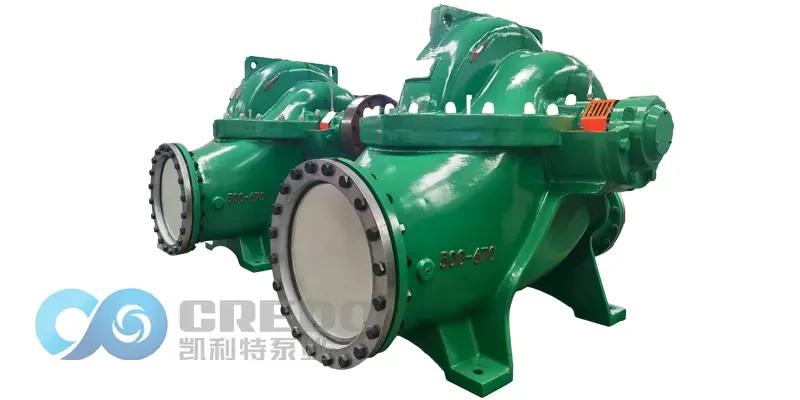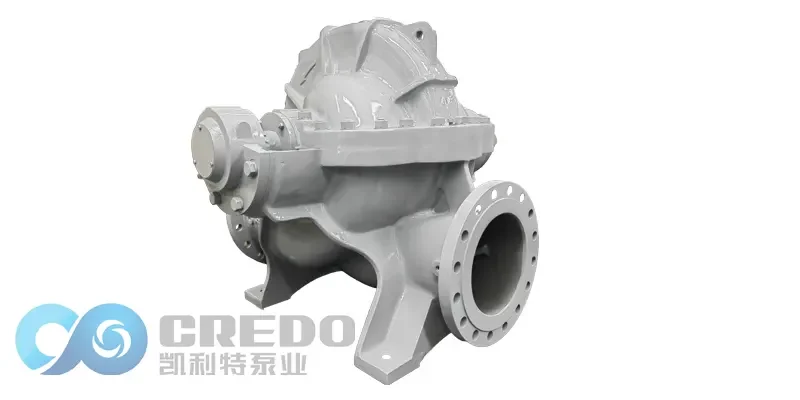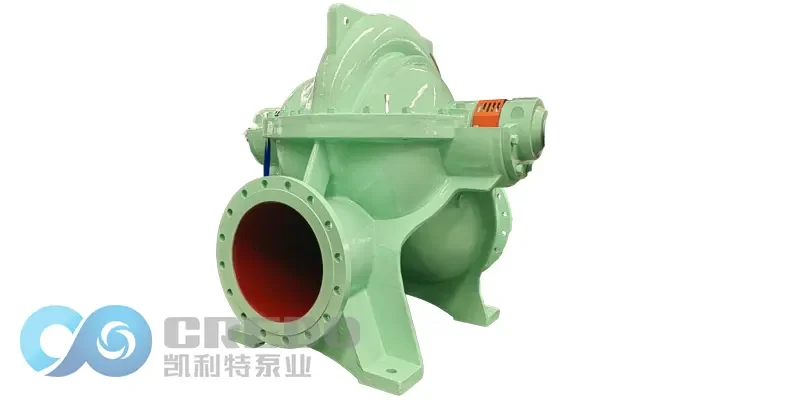
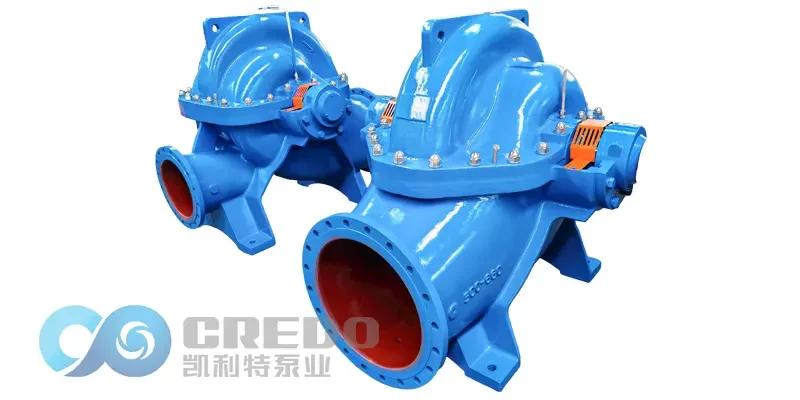
What Causes No Water Discharge in Horizontal Split Case Pumps?
During operation or commissioning, one of the most common issues encountered with a horizontal split case pump is the failure to discharge water or insufficient water output. If not promptly diagnosed and resolved, this issue can not only affect system performance but may also cause damage to the pump body and motor. This article analyzes the common causes of this problem from structural, installation, and operational perspectives, and provides targeted troubleshooting recommendations.
I. Common Causes for No Water Discharge in Horizontal Split Case Pumps
1. Air Leakage or Poor Sealing in the Suction Line
Air entering the suction system is one of the primary reasons why a horizontal split case pump fails to discharge water. If air leaks occur at suction line connections, flange gaskets, stuffing boxes, or vacuum gauge joints, air pockets will form inside the pump, preventing it from creating the necessary vacuum and thus stopping suction.
Solutions:
Check the sealing condition of suction piping and joints using soapy water or a vacuum gauge to locate leaks.
Retighten flange bolts or replace sealing gaskets.
Ensure the suction inlet is submerged to the required depth to prevent air entry.
2. Pump Casing Not Filled or Improperly Primed
If the pump casing and suction line are not fully filled with liquid before startup, the impeller will rotate in air (“dry running”), making it impossible to generate suction.
Solutions:
Before startup, fill the pump casing and suction line completely using a priming device or vacuum priming system.
Check whether the foot valve is properly sealed to prevent backflow and air entry.
After filling, release any trapped air through the vent valve.
3. Incorrect Rotation Direction
If the rotation direction of the horizontal split case pump is opposite to the design requirement, the impeller will push water toward the suction side instead of the discharge side, resulting in no water output. This is especially common after installing a new motor or after motor maintenance.
Solutions:
Before startup, “jog” the motor and verify that the rotation direction matches the arrow marked on the pump casing.
If the rotation is incorrect, swap any two of the motor power leads to correct the direction.
4. Excessive Suction Lift or Undersized Suction Pipe
When the suction water level is too low or the suction pipe diameter is too small, significant resistance occurs on the suction side, leading to cavitation or failure to draw water.
Solutions:
Check that the suction water level is above the minimum required suction height.
Ensure the suction pipe diameter meets design requirements, and minimize elbows or other sources of local resistance.
Remove any obstructions inside the pipeline.
5. Impeller Blockage or Damage
If the pumped medium contains impurities such as debris, sand, or fibrous materials, these can accumulate at the impeller inlet, causing clogging or wear. Over time, this leads to reduced flow or complete loss of discharge.
Solutions:
Stop the pump, disassemble, and clean the impeller passage thoroughly.
Inspect the impeller for wear, corrosion, or cracks; replace it if necessary.
Install a strainer at the suction inlet to prevent debris from entering.
6. Discharge Valve Closed or Blocked
If the discharge valve is closed or the discharge piping is blocked, the liquid inside the pump cannot flow out, making it appear as though the pump is not discharging water.
Solutions:
Check whether the discharge valve is open.
Inspect the discharge piping for blockages or sediment buildup.
Ensure that the check valve operates smoothly without sticking.
II. Preventive and Maintenance Recommendations
Regularly inspect suction and discharge pipelines for leaks and blockages.
Strictly follow operational procedures: fill the pump, release trapped air, and verify rotation direction before startup.
Keep the suction well clean to prevent debris from entering the impeller.
Maintain detailed operation and maintenance logs, monitoring flow, pressure, and current to detect anomalies early.
Conclusion
The most common causes of a horizontal split case pump failing to discharge water include air leakage, insufficient priming, incorrect rotation, or pipe blockage. Through systematic inspection and proper maintenance, such failures can be effectively prevented. For large double-suction horizontal split case pumps, particular attention should be paid to suction system sealing and priming procedures to ensure efficient and safe operation of the equipment.