What Problems Are Caused by Shaft Misalignment in Multistage Vertical Turbine Pumps?
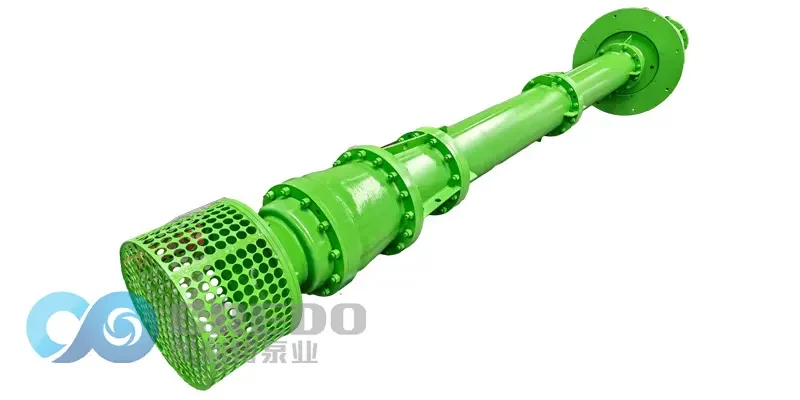
The structure of a multistage vertical turbine pump consists of a motor, coupling, pump shaft, line shaft bearings, and impeller. The concentricity and alignment precision of the shaft system are crucial to the pump’s operational stability. If the pump shaft and motor shaft are misaligned (also referred to as “non-coaxial” or “eccentric”), it directly affects the mechanical balance and service life of the equipment. This article analyzes the causes, symptoms, and preventive measures related to this issue.
I. Major Hazards of Shaft Misalignment
1. Significant Increase in Vibration and Noise
Shaft misalignment causes the coupling to generate periodic eccentric forces during rotation, resulting in unbalanced vibration in the pump system. Minor misalignment leads to high-frequency noise and slight vibration, while severe misalignment causes strong shaking of the entire unit, potentially damaging anchor bolts and foundations.
Typical symptoms:
Excessive vibration at startup (>4.5 mm/s RMS);
Periodic metallic friction noise from the pump or motor;
Unstable discharge pressure and flow rate.
2. Premature Bearing Wear and Overheating
When the shafts are not on the same centerline, the line shaft bearings, upper thrust bearing, and motor bearing all experience additional radial loads, leading to uneven contact stress. Over time, this results in bearing overheating, accelerated wear, lubricant degradation, and eventually serious failures such as shaft seizure.
Consequences:
Significantly reduced bearing life;
Elevated motor temperature and insulation aging;
Increased bearing vibration and oil film damage.
3. Abnormal Forces on Coupling and Pump Shaft
With misalignment, the coupling’s elastic elements (or rigid discs) experience alternating bending and torsional stresses during each rotation. Over time, this may cause:
Fatigue cracking or rupture of coupling rubber blocks or diaphragms;
Fatigue cracks or even fracture of the pump shaft;
Loosening or shearing of connecting bolts.
These issues often occur suddenly after long-term operation, representing typical shaft system fatigue failures.
4. Increased Power Consumption and Reduced Efficiency
Misalignment increases frictional resistance between the rotating and stationary components, leading to higher mechanical losses and shaft power demand. Consequently:
Motor current increases, and power consumption rises;
Pump efficiency decreases by 2–5%;
Overall system operating costs increase.
II. Common Causes of Shaft Misalignment in Multistage Vertical Turbine Pumps
Uneven installation foundation or inconsistent tightening of anchor bolts;
Improper coupling assembly or failure to perform proper alignment;
Bearing wear or axial movement after long-term operation;
Thermal expansion and contraction causing deformation of the motor or pump structure.
III. Preventive and Corrective Measures
Precision Alignment:
Use a dial indicator or laser alignment tool during installation to ensure radial deviation ≤ 0.05 mm and angular deviation ≤ 0.2 mm/100 mm.
Operation Monitoring:
Regularly measure vibration levels, motor current, and bearing temperature trends.
Maintenance and Inspection:
After replacing worn line shaft bearings, realign the entire shaft system.
Foundation Reinforcement:
Ensure sufficient base rigidity to prevent structural displacement during long-term operation.
Conclusion
Misalignment between the pump shaft and motor shaft of a multistage vertical turbine pump can cause excessive vibration, bearing overheating, coupling damage, and efficiency loss. Through precise alignment during installation and regular condition monitoring, the operational stability and service life of the pump set can be significantly improved.
During the commissioning stage of a multistage vertical turbine pump, maintaining shaft concentricity is not only a core indicator of installation quality but also the key to ensuring long-term, efficient operation of the equipment.