What’s the Reason for Vibration of Vertical Turbine Pump?
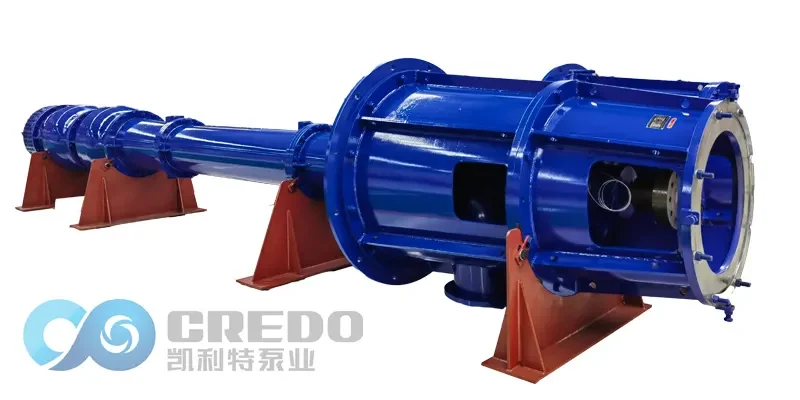
Vibration in vertical turbine pumps can significantly impact performance, longevity, and operational safety. Understanding the root causes of these vibrations is essential for effective maintenance and optimization. This article explores the primary reasons for vibration in vertical turbine pumps, including installation issues, shaft whirl, overload, turbulent flow, torsional vibration, and mutual pump interference, offering insights into mitigation strategies.
1. Installation and Assembly Deviations in Vertical Turbine Pumps
Improper installation of a vertical turbine pump can lead to significant vibrations. Key factors include:
Levelness and Verticality Issues: Deviations in the pump body’s levelness, thrust pad alignment, or the verticality of the lift pipe (typically 26 meters long, suspended without a filter screen) can cause vibrations. Excessive vertical deviation in the lift pipe leads to severe shaking during rotation, while overly rigid alignment may generate alternating stress, risking pipe breakage. The verticality error should be controlled within 2mm across the total length, with a vertical and horizontal error of 0.05/1000mm.
Impeller and Clearance Errors: The static balance tolerance of the pump head impeller should not exceed 100g, with an 8-12mm upper and lower serial clearance post-assembly. Incorrect assembly clearances are a major contributor to pump body vibration.
Proper installation and precise alignment are critical to minimizing vibration in vertical turbine pumps.
2. Drive Shaft Whirl in Vertical Turbine Pumps
Whirl, or self-excited vibration, occurs in the rotating shaft of a vertical turbine pump and is neither free nor forced vibration. It manifests as rotational shaft movement between bearings, often due to:
Insufficient Lubrication: Inadequate lubrication, especially in long drive shafts (with a 0.20-0.30mm clearance between the shaft and rubber bearing), can cause the shaft to shake. Issues like a broken or blocked water supply pipe for rubber bearing lubrication exacerbate this problem.
Shaft-Bearing Interaction: When the shaft contacts the rubber bearing, tangential forces oppose the shaft’s rotation, leading to a rolling motion along the bearing wall. This can burn out the rubber bearing if prolonged.
Regular maintenance of lubrication systems is essential to prevent whirl-induced vibrations in vertical turbine pumps.
3. Overload-Induced Vibration in Vertical Turbine Pumps
Overloading can cause severe vibrations in vertical turbine pumps, particularly affecting the thrust pad, which uses tin-based Babbitt alloy with an allowable load of 18MPa (180kgf/cm²). Key issues include:
Boundary Lubrication at Startup: During startup, the thrust pad operates under boundary lubrication, increasing wear risk.
Valve Malfunctions: Electric butterfly valves or manual gate valves at the pump’s water outlet may fail to open fully due to silt buildup or human error, causing exhaust delays, intense vibrations, and rapid thrust pad burnout.
Ensuring proper valve operation and timely exhaust can mitigate overload-related vibrations in vertical turbine pumps.
4. Turbulent Vibration at the Pump Outlet
Turbulent flow at the outlet of a vertical turbine pump can generate irregular pulsations, contributing to vibration. The outlet system typically includes a Dg500 short pipe, check valve, electric butterfly valve, manual valve, main pipe, and water hammer eliminator. Issues include:
Valve Blockages: Blocked or partially open valves increase local resistance, elevating momentum and pressure, which causes pipe wall and pump body vibrations. This is observable through pressure gauge pulsations.
Frequency Resonance: When turbulent flow’s dominant frequency aligns with the pump system’s natural frequency, energy absorption amplifies vibrations.
Fully opening valves and using appropriately sized spools with proper support can significantly reduce turbulent vibrations in vertical turbine pumps.
5. Torsional Vibration in Vertical Turbine Pumps
Torsional vibration arises from the interaction between the vertical turbine pump’s long drive shaft (24.94m) and the motor, connected via an elastic coupling. This vibration results from:
Superposition of Vibrations: Multiple vibrations with different angular frequencies combine, creating complex torsional vibrations with two degrees of freedom.
Impact on Thrust Pads: These vibrations primarily damage thrust pads. To mitigate this, upgrading from 68# to 100# lubricating oil increases viscosity, supporting the hydraulic lubricating film’s formation and maintenance.
Proper lubrication adjustments can minimize torsional vibrations in vertical turbine pumps.
6. Mutual Interference Between Pumps on the Same Beam
When multiple vertical turbine pumps and motors are installed on a shared reinforced concrete frame beam (1450mm x 410mm, with each pump-motor unit weighing 18 tons), their vibrations can interact:
Coupled Vibrations: Excessive vibration in one pump can affect an adjacent pump, even if the latter is operating normally. For instance, a motor with excessive vibration (amplitude rising to 0.15mm) can destabilize a nearby pump when tested without load (disconnected elastic coupling).
Detection Challenges: This mutual interference is subtle and requires careful monitoring during operation.
Isolating or balancing adjacent pumps can reduce interference-related vibrations in vertical turbine pumps.
Conclusion
Vibration in vertical turbine pumps can stem from installation errors, shaft whirl, overloading, turbulent flow, torsional vibrations, or mutual pump interference. By addressing these issues through precise installation, regular maintenance, proper valve operation, lubrication upgrades, and careful monitoring of adjacent pumps, operators can enhance pump reliability, reduce wear, and extend service life. Understanding and mitigating these vibration causes ensures optimal performance for vertical turbine pumps in demanding applications.
What’s the Reason for Vibration of Vertical Turbine Pump?
Vibration in vertical turbine pumps can significantly impact performance, longevity, and operational safety. Understanding the root causes of these vibrations is essential for effective maintenance and optimization. This article explores the primary reasons for vibration in vertical turbine pumps, including installation issues, shaft whirl, overload, turbulent flow, torsional vibration, and mutual pump interference, offering insights into mitigation strategies.
1. Installation and Assembly Deviations in Vertical Turbine Pumps
Improper installation of a vertical turbine pump can lead to significant vibrations. Key factors include:
Levelness and Verticality Issues: Deviations in the pump body’s levelness, thrust pad alignment, or the verticality of the lift pipe (typically 26 meters long, suspended without a filter screen) can cause vibrations. Excessive vertical deviation in the lift pipe leads to severe shaking during rotation, while overly rigid alignment may generate alternating stress, risking pipe breakage. The verticality error should be controlled within 2mm across the total length, with a vertical and horizontal error of 0.05/1000mm.
Impeller and Clearance Errors: The static balance tolerance of the pump head impeller should not exceed 100g, with an 8-12mm upper and lower serial clearance post-assembly. Incorrect assembly clearances are a major contributor to pump body vibration.
Proper installation and precise alignment are critical to minimizing vibration in vertical turbine pumps.
2. Drive Shaft Whirl in Vertical Turbine Pumps
Whirl, or self-excited vibration, occurs in the rotating shaft of a vertical turbine pump and is neither free nor forced vibration. It manifests as rotational shaft movement between bearings, often due to:
Insufficient Lubrication: Inadequate lubrication, especially in long drive shafts (with a 0.20-0.30mm clearance between the shaft and rubber bearing), can cause the shaft to shake. Issues like a broken or blocked water supply pipe for rubber bearing lubrication exacerbate this problem.
Shaft-Bearing Interaction: When the shaft contacts the rubber bearing, tangential forces oppose the shaft’s rotation, leading to a rolling motion along the bearing wall. This can burn out the rubber bearing if prolonged.
Regular maintenance of lubrication systems is essential to prevent whirl-induced vibrations in vertical turbine pumps.
3. Overload-Induced Vibration in Vertical Turbine Pumps
Overloading can cause severe vibrations in vertical turbine pumps, particularly affecting the thrust pad, which uses tin-based Babbitt alloy with an allowable load of 18MPa (180kgf/cm²). Key issues include:
Boundary Lubrication at Startup: During startup, the thrust pad operates under boundary lubrication, increasing wear risk.
Valve Malfunctions: Electric butterfly valves or manual gate valves at the pump’s water outlet may fail to open fully due to silt buildup or human error, causing exhaust delays, intense vibrations, and rapid thrust pad burnout.
Ensuring proper valve operation and timely exhaust can mitigate overload-related vibrations in vertical turbine pumps.
4. Turbulent Vibration at the Pump Outlet
Turbulent flow at the outlet of a vertical turbine pump can generate irregular pulsations, contributing to vibration. The outlet system typically includes a Dg500 short pipe, check valve, electric butterfly valve, manual valve, main pipe, and water hammer eliminator. Issues include:
Valve Blockages: Blocked or partially open valves increase local resistance, elevating momentum and pressure, which causes pipe wall and pump body vibrations. This is observable through pressure gauge pulsations.
Frequency Resonance: When turbulent flow’s dominant frequency aligns with the pump system’s natural frequency, energy absorption amplifies vibrations.
Fully opening valves and using appropriately sized spools with proper support can significantly reduce turbulent vibrations in vertical turbine pumps.
5. Torsional Vibration in Vertical Turbine Pumps
Torsional vibration arises from the interaction between the vertical turbine pump’s long drive shaft (24.94m) and the motor, connected via an elastic coupling. This vibration results from:
Superposition of Vibrations: Multiple vibrations with different angular frequencies combine, creating complex torsional vibrations with two degrees of freedom.
Impact on Thrust Pads: These vibrations primarily damage thrust pads. To mitigate this, upgrading from 68# to 100# lubricating oil increases viscosity, supporting the hydraulic lubricating film’s formation and maintenance.
Proper lubrication adjustments can minimize torsional vibrations in vertical turbine pumps.
6. Mutual Interference Between Pumps on the Same Beam
When multiple vertical turbine pumps and motors are installed on a shared reinforced concrete frame beam (1450mm x 410mm, with each pump-motor unit weighing 18 tons), their vibrations can interact:
Coupled Vibrations: Excessive vibration in one pump can affect an adjacent pump, even if the latter is operating normally. For instance, a motor with excessive vibration (amplitude rising to 0.15mm) can destabilize a nearby pump when tested without load (disconnected elastic coupling).
Detection Challenges: This mutual interference is subtle and requires careful monitoring during operation.
Isolating or balancing adjacent pumps can reduce interference-related vibrations in vertical turbine pumps.
Conclusion
Vibration in vertical turbine pumps can stem from installation errors, shaft whirl, overloading, turbulent flow, torsional vibrations, or mutual pump interference. By addressing these issues through precise installation, regular maintenance, proper valve operation, lubrication upgrades, and careful monitoring of adjacent pumps, operators can enhance pump reliability, reduce wear, and extend service life. Understanding and mitigating these vibration causes ensures optimal performance for vertical turbine pumps in demanding applications.