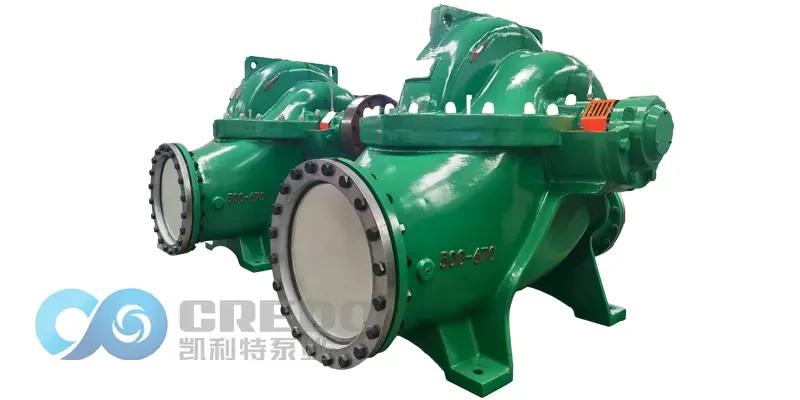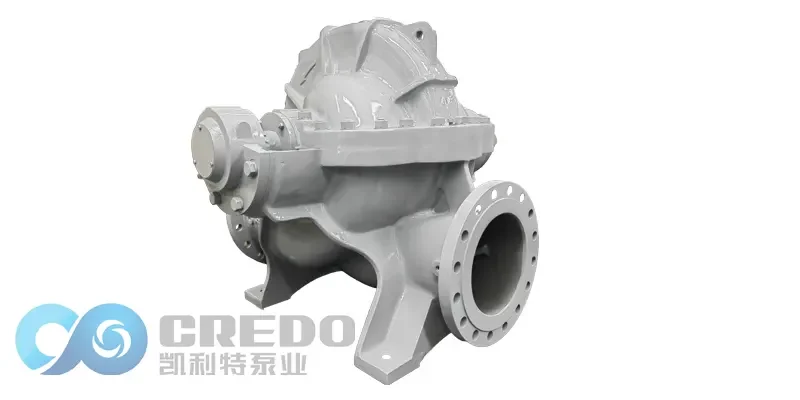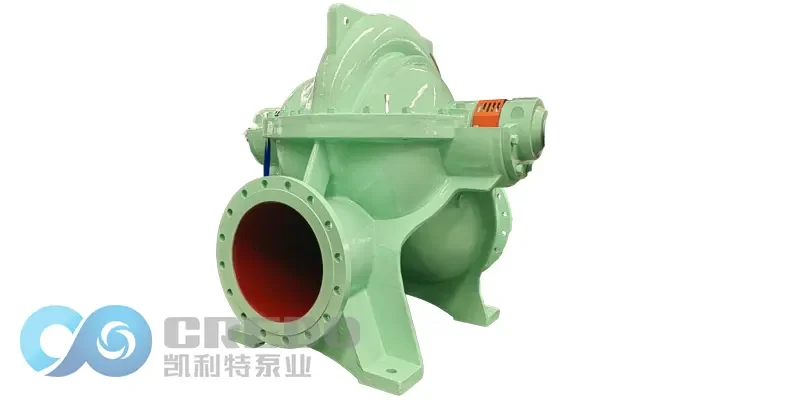
Why the Suction Range of an Axial Split Case Pump Is Limited to Five or Six Meters
The axial split case pump is a widely used type of centrifugal pump, particularly favored in water treatment, chemical processing, and agricultural irrigation. Known for its efficiency in handling large volumes of liquid, one common user concern is its limited suction range—typically restricted to five or six meters. Understanding the physical and mechanical reasons behind this limitation is essential for proper pump selection and operation. This article explores the factors influencing the suction capability of an axial split case pump and explains why its range is inherently limited.
Understanding Suction Range vs. Head in an Axial Split Case Pump
Before diving into the causes of limited suction, it’s important to differentiate between two often-confused terms: suction range and head.
1. Suction Range
Definition: The suction range refers to the vertical distance from the liquid surface to the pump inlet under negative pressure conditions. It indicates how high the axial split case pump can lift liquid during the suction phase.
Influencing Factors: Suction range is affected by atmospheric pressure, internal pressure drops, gas entrainment, and the vapor pressure of the pumped fluid.
Typical Value: Due to physical limitations, the suction range of most axial split case pumps maxes out at around 5 to 6 meters under standard atmospheric conditions.
2. Head
Definition: Head refers to the total energy (in meters) the pump can impart to the fluid, including both the vertical lift and frictional losses through the pipeline system.
Influencing Factors: Pump head is influenced by the pump’s performance curve, impeller speed, fluid viscosity and density, and the layout of the piping system.
Why the Suction Range of an Axial Split Case Pump Is Limited
Despite the strong performance of axial split case pumps in delivering liquid over long distances, their suction capacity is limited due to the following physical and mechanical reasons:
1. Atmospheric Pressure Limitation
At sea level, atmospheric pressure is about 101.3 kPa (760 mmHg), which theoretically allows water to be lifted to a height of approximately 10.3 meters. However, real-world conditions—including friction, fluid inertia, and resistance in the suction line—reduce this theoretical maximum. As a result, the effective suction range of an axial split case pump is realistically about 5 to 6 meters.
2. Vacuum Formation and Gas Compression
As the suction height increases, the internal pressure within the pump drops. If the suction lift exceeds the physical capacity of the system, a vacuum may form. This can lead to gas compression and air entrainment in the pump chamber, disrupting liquid flow and potentially causing the pump to lose prime or fail altogether.
3. Influence of Vapor Pressure and Cavitation
All liquids have a specific vapor pressure. If the internal pressure in the suction line drops below this vapor pressure, the liquid begins to vaporize, forming vapor bubbles. These bubbles can collapse violently when they move into higher-pressure zones, a phenomenon known as cavitation. Cavitation can severely damage the impeller and reduce pump performance. The axial split case pump, due to its structural design, is particularly vulnerable to cavitation at excessive suction heights.
4. Structural Design Constraints
Axial split case pumps are optimized for high flow and low-to-moderate head conditions. Their horizontal, double-suction design favors balanced flow but limits the ability to generate strong negative pressure on the suction side. Because of this, axial split case pumps are not suited for applications requiring long suction lifts. Attempting to operate them beyond their designed suction range leads to inefficiencies and premature wear.
Conclusion
The limited suction range of an axial split case pump—generally no more than five to six meters—is dictated by fundamental physical laws, including atmospheric pressure, liquid vapor pressure, and fluid dynamics within the pump. While the axial split case pump excels at high-volume transfer and is ideal for many industrial and municipal applications, it is not designed for deep suction scenarios. Users needing a greater suction lift should consider alternative solutions such as self-priming pumps or vertical turbine pumps. By understanding these design constraints, users can make better pump selections and maximize system reliability and efficiency.